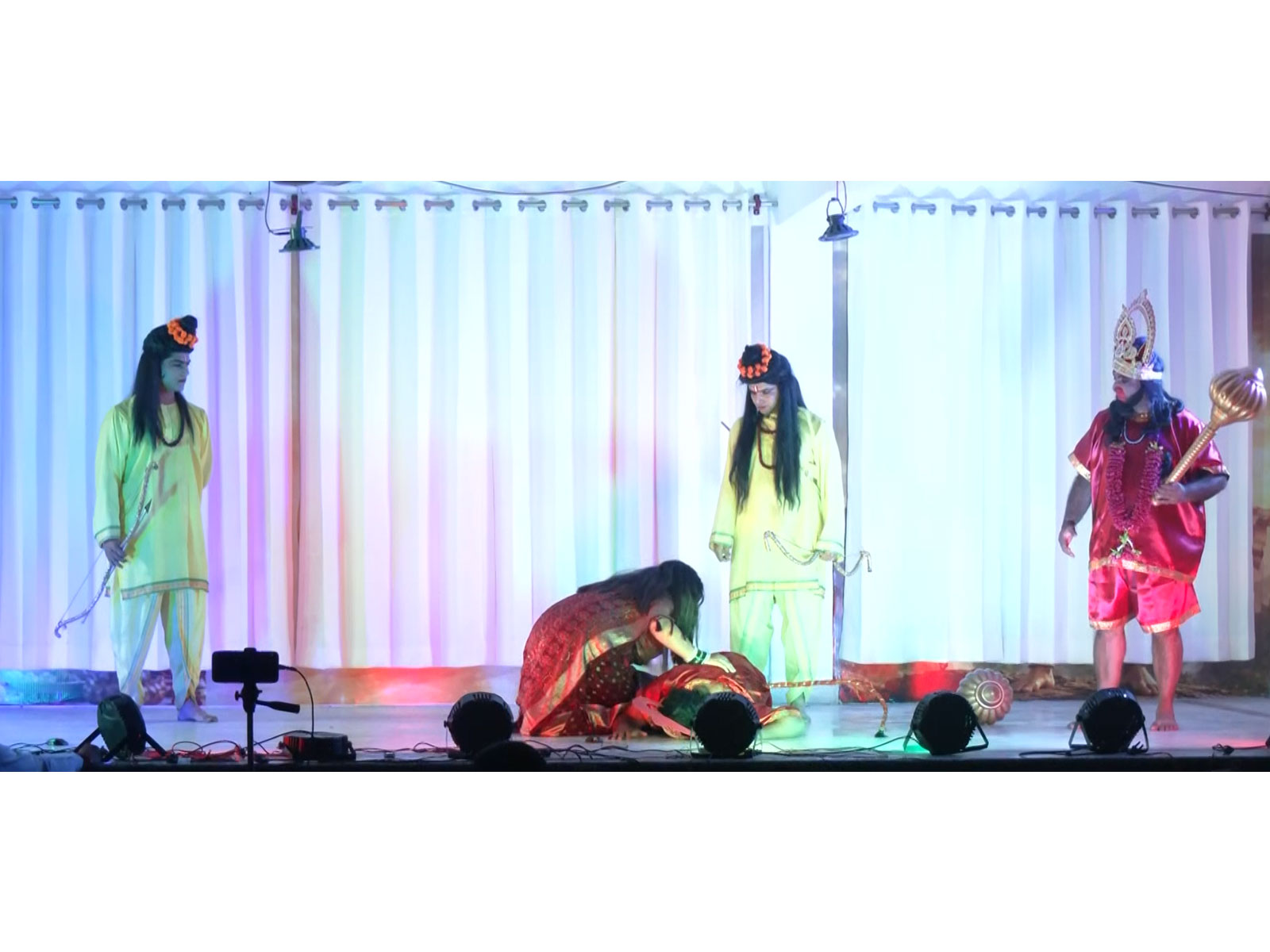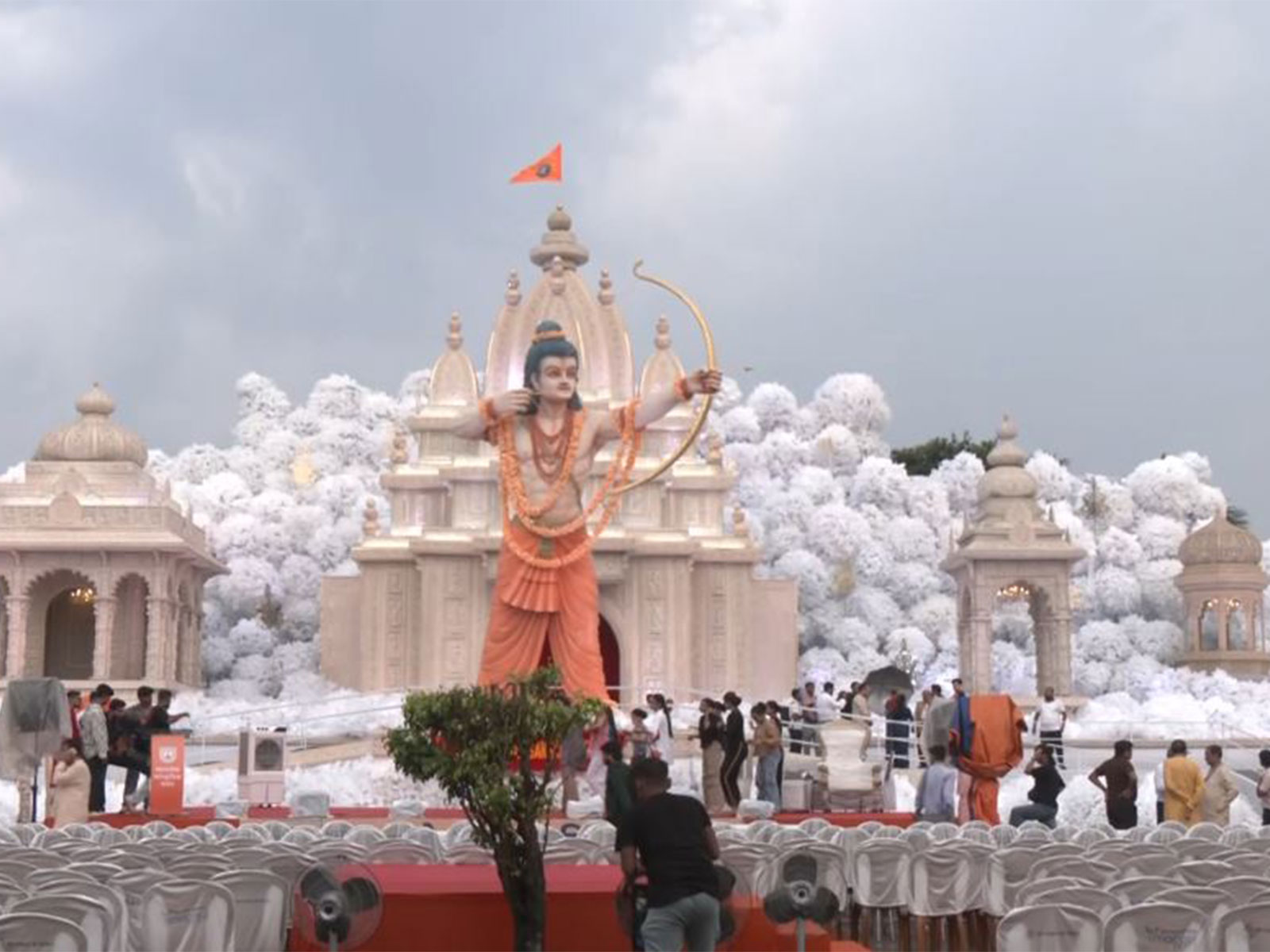
Jammu (Jammu and Kashmir) [India], October 16 (ANI): In an effort to promote the Dogri language and preserve the region's cultural identity, a Ramleela performance staged in Dogri during Navratri has been drawing audiences of different age groups in Jammu, with organisers saying the initiative aims to reconnect the younger generation with their regional language.
The performance presents episodes from the Ramayana in Dogri, offering audiences an opportunity to experience the traditional epic in the language spoken in the region. The initiative has also received an encouraging response from young people, many of whom say it has helped them appreciate the importance of their mother tongue.
Kasturi Gupta, chairman of the Senior Citizens Support Services Club, said the declining use of Dogri in homes and educational institutions had prompted the organisation to explore ways to encourage people to embrace the language.
"Today, our biggest problem is that people are not speaking Dogri at home. The other places where children grow and learn are schools, colleges and universities, but the language is not being used there either. This means the language could gradually become extinct," Gupta told ANI.
He said promoting a language required sustained efforts across different sections of society rather than organising isolated events.
The club has been conducting programmes in schools, colleges and universities to encourage the use of Dogri. It has also organised initiatives to create greater public visibility for the language, including installing signboards in Dogri at public spaces in the city.
Gupta said cultural events such as Ramleela could help change people's perceptions about their mother tongue and encourage them to take pride in speaking it.
"Children are also coming to watch the performance. If we familiarise them with our culture and language, the message reaches people more effectively because language and culture are connected," he said.
Vijay Sharma, general secretary of the club, said the Dogri Ramleela was conceived as part of a series of initiatives to promote the language, which he said had witnessed a decline in everyday use.
He said the organisation had received a positive response to its earlier programmes and planned to organise a procession on October 24, in which around 500 students from different schools were expected to participate.
Sharma said Ramleela was chosen because the Ramayana was familiar to people across generations, making it an effective medium to promote Dogri.
"The concept was that Ramleela and other cultural events can convey a message to the masses quickly. People of all ages watch the Ramayana, so we thought, why not stage it in our own Dogri language as well? This would show people that the Ramayana can also be performed in Dogri," he said.
The production has been directed by Rajnish Gupta, who has also worked on the Dogri script. Artists involved in the performance said adapting the epic to the regional language required effort but also gave them an opportunity to contribute to the preservation of Dogri.
King C Bharti, an artist associated with the production, said the experience had allowed him to explore the language in a different way.
"The script has been written in Dogri, particularly in the traditional form of the language. It takes some effort, but it is enjoyable, and it feels good that we are contributing in some way to promoting our language," he said.
He said the response from audiences had been encouraging, adding that the participation of younger viewers was particularly heartening.
Another artist, Ajay Saini, said the initiative could help younger generations become more comfortable speaking Dogri.
He said young people sometimes hesitate to use their mother tongue, even when they understand it, and that cultural performances could help overcome this reluctance.
The audience response reflected a similar sentiment. Manas Sharma, a young viewer, said he usually spoke Dogri at home but switched to Hindi when interacting with people outside.
"It is a good initiative because we should know our mother tongue. I speak Dogri at home, but outside, people generally do not speak it, so I switch to Hindi," he said.
Another young audience member, Rishi Sharma, said the performance had encouraged him to return regularly and learn new Dogri words.
He said such productions should be organised at more places in Jammu to ensure that the language remains part of everyday life.
For the organisers and performers, the initiative is an attempt to use a familiar cultural tradition to bring Dogri back into public conversations and encourage younger generations to embrace their linguistic heritage. (ANI)
Dogri Ramleela draws crowds, promotes Jammu's linguistic heritage