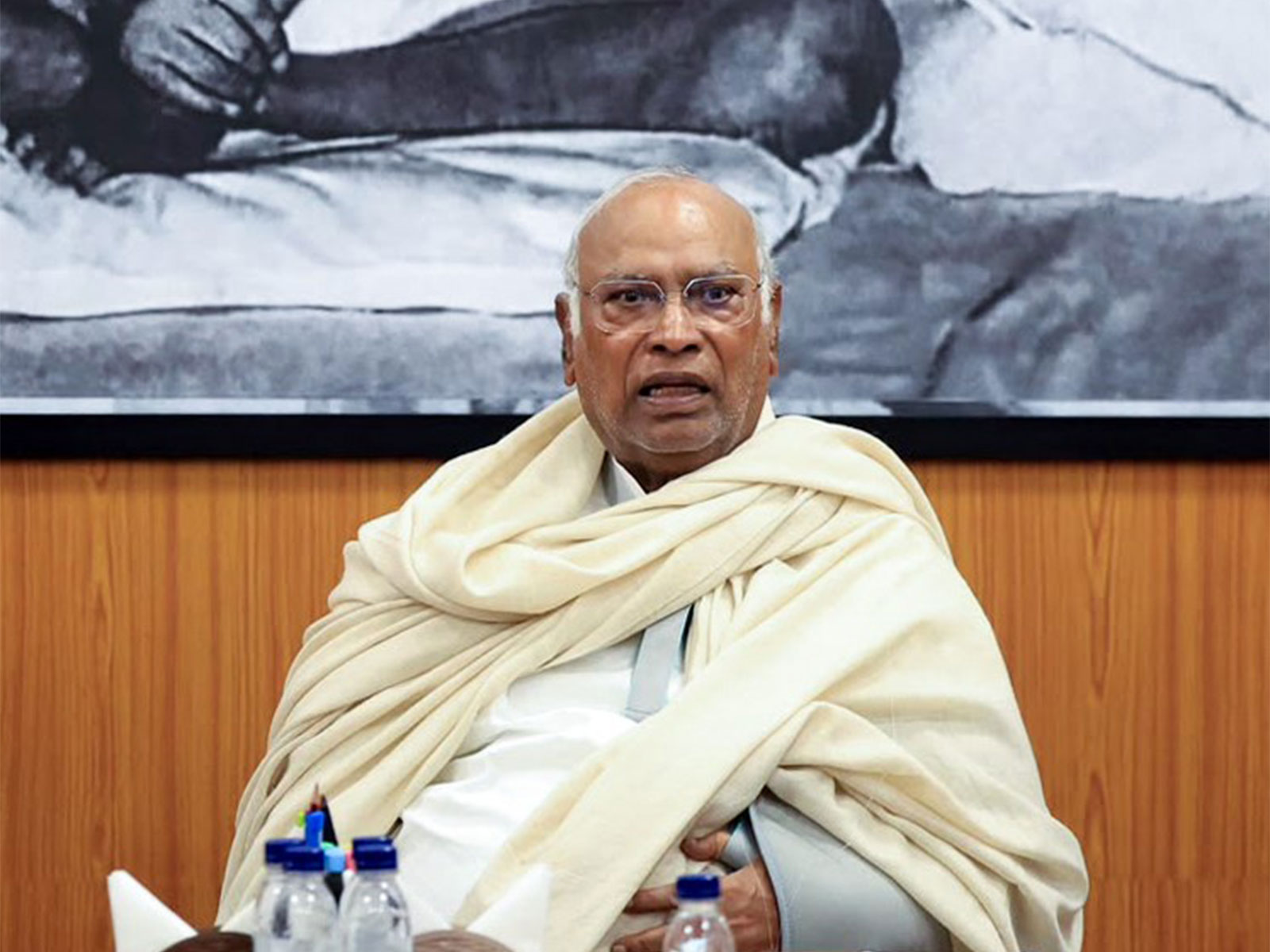
New Delhi [India], November 25 (ANI): Congress president Mallikarjun Kharge on Wednesday questioned the Centre's accountability over the prevalence of anaemia and malnutrition among women and children, citing findings from the Indian Council of Medical Research's (ICMR) SAMPADA survey and expenditure figures under various nutrition schemes.
In a post on X, Kharge questioned how India could realise its demographic dividend when millions of women and children continued to suffer from malnutrition.
"How can India realise its demographic dividend when millions of its women and children continue to suffer from malnutrition?" he said.
Citing the ICMR-SAMPADA report, Kharge said 55.9 per cent of women of reproductive age were anaemic, while nearly two-thirds of adolescent girls and boys were deficient in Vitamin B12. He also said that 42 per cent of children aged 1-4 years were anaemic.
"The Modi Govt's own ICMR-SAMPADA report reveals that 55.9% of women of reproductive age are anaemic. Nearly two-thirds of adolescent girls and boys are deficient in Vitamin B12. 42% of children aged 1–4 years are anaemic," he wrote.
Referring to the findings in Gujarat, the Congress president said 66 per cent of women of reproductive age and 57 per cent of young children were anaemic.
Kharge further questioned the government's emphasis on classifying a majority of anaemia cases as mild, saying it did not obscure the prevalence of more serious cases.
"Modi Govt's emphasis on 'mild' anaemia cannot obscure the fact that nearly 30% of women of reproductive age suffer from MODERATE or SEVERE anaemia," he said.
He also cited the latest National Family Health Survey-6 (NFHS-6), claiming that nearly one-third of children in the country were underweight and one in five suffered from acute malnutrition.
Questioning the utilisation of funds allocated for nutrition programmes, Kharge said over Rs 1.13 lakh crore had been released under Saksham Anganwadi, POSHAN 2.0 and predecessor schemes over six financial years.
He further claimed that there was a gap of over Rs 2,500 crore between funds released and utilised under POSHAN 2.0 in four years, while nearly 44 per cent of the funds released under the original POSHAN Abhiyaan remained unutilised.
Kharge also raised concerns over the share of the Women and Child Development Ministry in the Union Budget, saying it had nearly halved from 0.96 per cent in 2015-16 to 0.50 per cent in 2025-26.
"After 12 years of the Modi Govt, multiple nutrition schemes, fortified rice and iron supplementation programmes, where is the ACCOUNTABILITY?" he asked.
How can India realise its demographic dividend when millions of its women and children continue to suffer from malnutrition? The Modi Govt's own ICMR-SAMPADA report reveals that - ▪️55.9% of women of reproductive age are anaemic. ▪️Nearly two-thirds of adolescent girls and boys are deficient in Vitamin B12. ▪️42% of children aged 1–4 years are anaemic. ▪️In Gujarat, 66% of women of reproductive age and 57% of young children are anaemic. Modi Govt's emphasis on “mild” anaemia cannot obscure the fact that nearly 30% of women of reproductive age suffer from MODERATE or SEVERE anaemia. The latest NFHS-6 also reveals that nearly one-third of our children are underweight and one in five suffers from acute malnutrition. Consider the Government's own financial records — 1️⃣ Over ₹1.13 lakh Cr released under Saksham Anganwadi, POSHAN 2.0 and predecessor schemes in six financial years. 2️⃣ Over ₹2,500 Cr gap between funds released and utilised under POSHAN 2.0 in just four years. 3️⃣ Nearly 44% of funds released under the original POSHAN Abhiyaan remained unutilised. 4️⃣ The share of Women and Child Development in the Union Budget has nearly HALVED - from 0.96% in 2015-16 to 0.50% in 2025-26. After 12 years of the Modi Govt, multiple nutrition schemes, fortified rice and iron supplementation programmes, where is the ACCOUNTABILITY?
— Mallikarjun Kharge (@kharge) November 25, 2026
Meanwhile, the ICMR's SAMPADA survey, conducted between 2023 and 2025, provides national estimates of anaemia and micronutrient deficiencies across different age groups and stages of life.
According to the official release, the survey covered more than two lakh individuals from over 81,000 households across 183 districts in 35 States and Union Territories. More than 1.7 lakh blood samples were analysed for haemoglobin estimation.
The survey found anaemia prevalence at 42 per cent among children aged 12-59 months, 46 per cent among adolescent girls aged 10-19 years and 56 per cent among women of reproductive age. Among adolescent boys and men aged 20-59 years, the prevalence stood at 22-23 per cent.
The report also stated that the majority of anaemia cases across population groups were mild, with severe anaemia observed in less than two per cent of people across most age groups.
It further found that iron deficiency accounted for approximately half of anaemia cases among women, adolescent girls and children. The survey noted that other nutritional and non-nutritional factors, including infections, haemoglobinopathies and inflammation associated with chronic diseases, also needed to be addressed.
Commenting on the findings, Dr Rajiv Bahl, Secretary of the Department of Health Research and Director General of ICMR, said the survey provided nationally representative estimates of anaemia and detailed information on micronutrient deficiencies.
"SAMPADA provides nationally representative estimates of anaemia across children, adolescents, adults, pregnant and lactating women and older adults, together with detailed information on micronutrient deficiencies to evaluate potential causes of anaemia. It is encouraging that the prevalence of anaemia is lower in SAMPADA compared to previous national surveys," Bahl said.
He added that the survey's comprehensive anaemia profiling provided an evidence base to strengthen ongoing national efforts under the Anaemia Mukt Bharat initiative.
Dr Bharati Kulkarni, Director of ICMR-NIN, said the findings supported targeted and population-specific approaches to anaemia prevention and management, while also identifying areas requiring further research and improved surveillance.
The ICMR release said the findings could help strengthen national efforts under Anaemia Mukt Bharat through targeted diagnosis, treatment and monitoring, particularly among vulnerable population groups. (ANI)