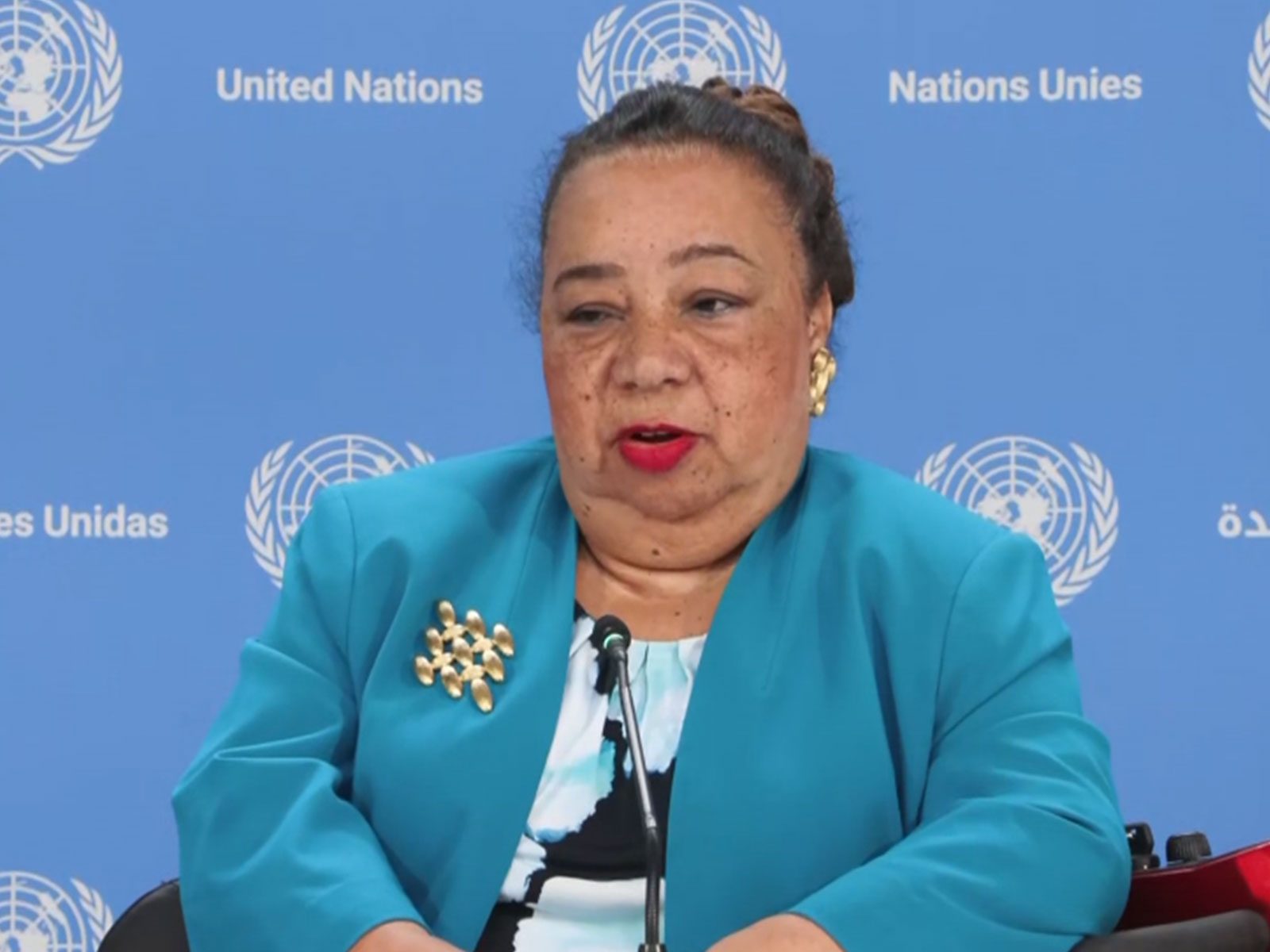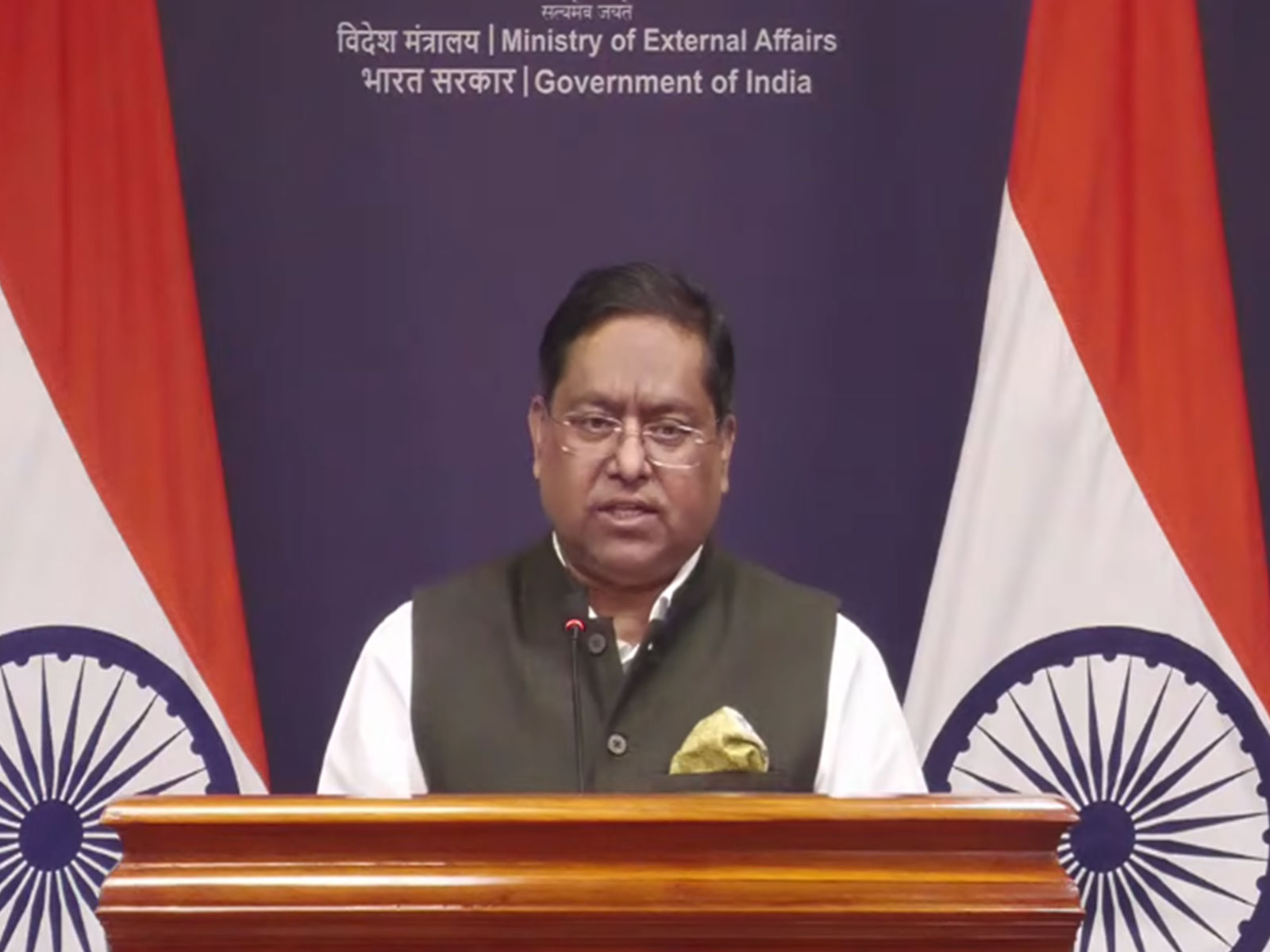
New Delhi [India], November 25 (ANI): United Nations Special Rapporteur on the Rights of Persons with Disabilities Heba Hagrass on Wednesday praised India's community-based rehabilitation model, describing it as an effective and relatively low-cost approach to supporting persons with disabilities, while urging the government to further expand such initiatives to promote independent living.
Addressing a press conference after concluding her first official visit to India from November 16 to 25, Hagrass said she was particularly interested in examining India's experience with community-based rehabilitation and inclusive development, adding that she was impressed by the initiatives she witnessed during her 10-day visit.
"India is very well known for working on community-based rehabilitation for years; maybe it's more than 20 years now. And we are looking up to India as a country from the other developing countries and how they do it because it is lower cost, and it is reaching everybody either in their homes or in a close-by spot that all the parents know how to get the services from," Hagrass said.
Explaining her interest in India's rehabilitation framework, she said, "This was my urge and my major drive to keep on asking India to allow me to invite me to this visit because I really wanted to have a good look at community-based rehabilitation and inclusive development. And I was very impressed with what I saw."
Hagrass also highlighted the progress made in extending community-based rehabilitation to persons with intellectual and developmental disabilities, saying she was surprised to see how several communities were addressing their needs through this approach.
"I also saw that you managed to have community-based rehabilitation for intellectual disability at the very beginning, untouchable by community-based because they did not know how to manage it or how to deal with it. And it was a surprise for me to see that there are many communities with intellectual disabilities and developmental disabilities that are being tackled with the community-based approach, and they are performing well," she said.
Calling for further expansion of these initiatives, the UN Special Rapporteur said community-based rehabilitation was important in helping persons with disabilities live independently rather than remain confined to institutional settings.
"I also encourage the country and the government to push forward more community-based rehabilitation because it is more cost-effective for people with disabilities and their families, and its results are really very effective," Hagrass said.
She further emphasised that community-based support services could improve the lives of persons with disabilities by enabling them to exercise their choice to live independently within their communities.
"So the community-based rehabilitation services are really getting much better, and they really are expected to improve the lives of persons with disabilities who have the choice to live independently in the community," she said.
During the press conference, Hagrass also stressed the importance of including persons with disabilities in the ongoing census in India, calling for greater awareness among families to ensure that disability-related information is accurately captured.
She said families should not consider disability a stigma and should openly disclose the nature of disabilities among their children so that they can be included in relevant services and government planning.
"While doing that, it is important that we make some sort of awareness-raising for families that it is not a stigma to say that I have a child with a disability and what type of disability they have because in this way they will be included in services. If we are not visible in the census, we are not visible for services. So this is the only way to speak it out loud," she said.
Hagrass also underlined the importance of making artificial intelligence and emerging technologies accessible to persons with disabilities, urging technology developers to incorporate accessibility features at the design stage rather than attempting to introduce them later.
She said that although efforts were underway to make technology more accessible, accessibility considerations needed to be integrated before applications and innovations were developed.
"I think they are adapting a lot of things, and we are very much keen to make them understand that this has to be done now before they create the applications or the inventions they are making and not then add on to what they have done because the cost becomes humongous, and they then are not really ready to adjust the applications or the AI to serve persons with disabilities," she said.
Reiterating the importance of inclusive technological development, Hagrass said, "AI should serve persons with disabilities and not work against them."
Hagrass, who undertook her first official country visit to India, travelled to New Delhi, Bengaluru and Chennai during the 10-day mission.
She met representatives of the Union and state governments, Parliament, the judiciary, the National Human Rights Commission, organisations of persons with disabilities, civil society groups, service providers, academic institutions, employers and United Nations entities.
She said the visit provided an opportunity to assess progress in the realisation of the rights of persons with disabilities, the opportunities available to them and the challenges that remain. (ANI)
UN Special Rapporteur praises India's community-based rehabilitation model, calls for further expansion