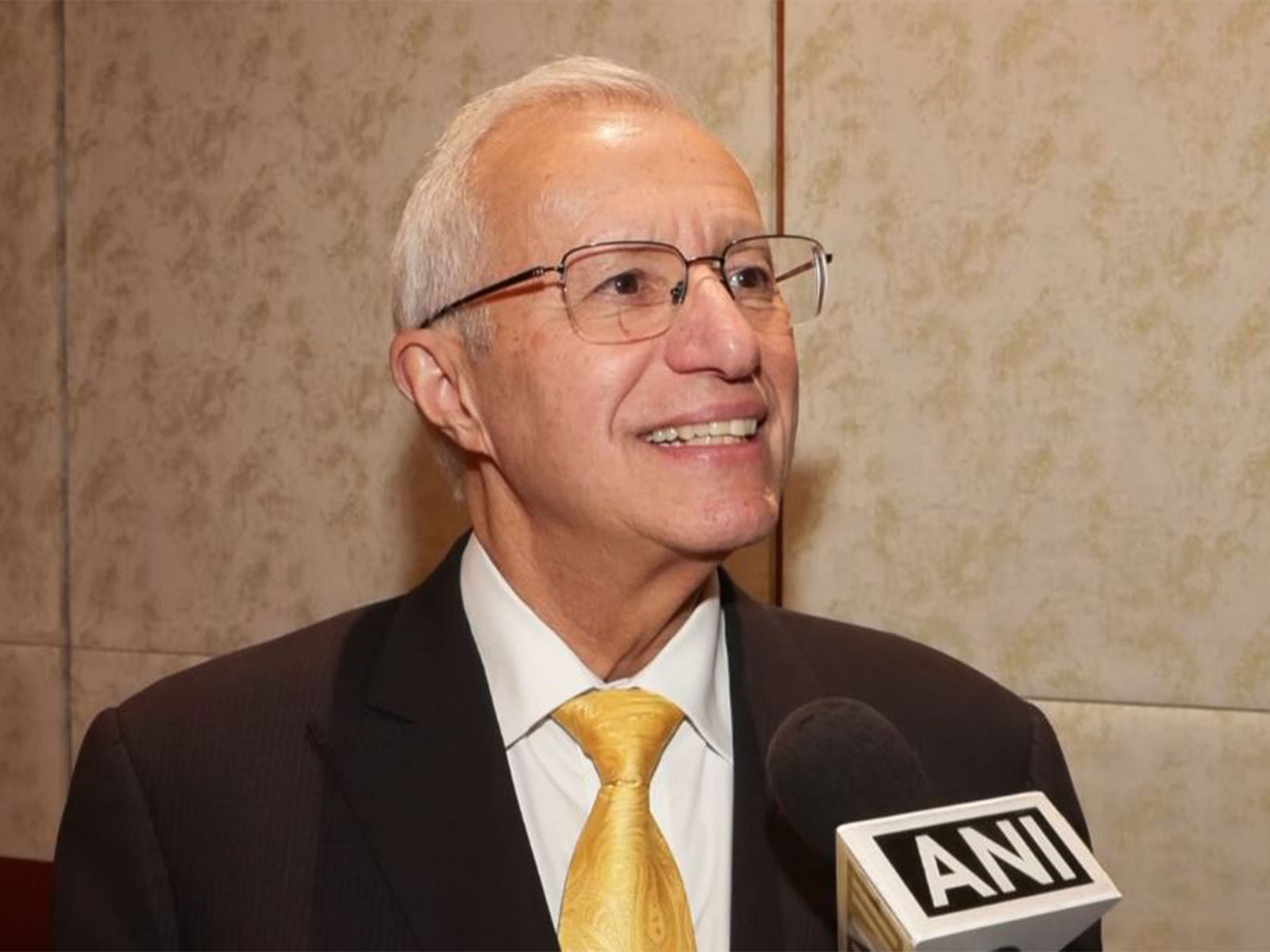
Sydney [Australia], November 23 (ANI): Prime Minister Narendra Modi’s skill in navigating great-power pressures is a key reason he was named Asia’s second-most effective regional leader in the Lowy Institute’s 2026 Asia Power Index, according to Hunter S Marston, Director of the Southeast Asia Program and Project Lead for the Asia Power Index.
Speaking to ANI, Marston cited India’s border with China as a crucial test of diplomacy. By managing friction, keeping trade flowing, and restoring a measure of stability along the frontier, New Delhi has shown both diplomatic agility and military deterrence against a larger power, he said
"Probably one is Modi's ability to handle great power pressures. The fact that India shares a border with China and a major source of tension there and has been able to navigate that relationship and restore some stability to the China-India relationship, continue trading, and restore an element of peace and stability along its shared border with China is a positive signal that India is an effective diplomatic power and military capable of deterring a big power like China," Marston said.
Marston noted that similar dynamics apply to smaller neighbours such as Pakistan, which sits lower in the rankings, as well as Myanmar. Despite sharing complex, contentious borders, India has continued to draw substantial international investment while steering through competing global pressures.
"Also, the same goes for a smaller power like Pakistan, which falls further down the rankings. But India has been able to navigate its contentious geography. It also shares a border with Myanmar. Despite the challenges that come with that geography, India has been able to attract massive international investment. It has been able to sail between these competing pressure points internationally," he said.
He added that India has had to balance exposure to both Russia and the United States, which expect different forms of alignment from New Delhi, including on the Russia-Ukraine conflict. "India has maintained its non-aligned posture," he said.
Among the eight index’s measures, diplomatic influence stands out as India’s strongest suit. Marston explained that diplomatic influence reflects a country's diplomatic network, the size of its embassies and missions abroad, and the number of international visits made by its leader and of visitors received.
"India is a major hub for international diplomacy," he said, noting its membership in UN-led and other multilateral groupings, including BRICS, which enhances its multilateral power.
"The other, as we've discussed, is the perception that India is an effective foreign policy power. So these are survey-based findings that rate India's effectiveness as a foreign policy leader," he said.
On the defence side, India climbed two spots in defence networks to ninth overall. Marston linked the gain to deeper security ties, especially maritime security outreach in Southeast Asia and BrahMos missile sales to countries such as Indonesia, Vietnam, and the Philippines.
While defence networks remain India’s lowest-scoring measure among the eight categories, Marston said its sharp upward movement this year points to strong momentum ahead.
"Part of that's driven by its increased defence engagement, particularly in Southeast Asia, where India is now seen as a very proactive player in terms of maritime security. And its sale of BrahMos missiles to Indonesia, Vietnam, and the Philippines has significantly moved it up in terms of being an active presence in these defence networks in Southeast Asia. So, I see that as one area where we're likely to see continued growth. And the fact that that's India's weakest measure of the eight measures in total. But one of the most dramatic rises this year for India's comprehensive power suggests that it's going to continue to rise in the future," he said. (ANI)
PM Modi’s handling of great-power pressures key to Asia Power Index ranking, says Lowy Institute’s Hunter Marston