By Binod Prasad Adhikari
Lalitpur [Nepal], October 29 (ANI): Along the terraced farms in Bungmati, farmers are busy harvesting ripe paddy, keeping a constant watch on the sky as they worry about the heavy rainfall that is expected over the weekend as an impact of “Cyclone Arnab.”
The cyclone, which has made landfall in coastal areas along the Bay of Bengal in India, has pushed rain clouds further into the landlocked Himalayan nation. Nestled between India and China, Nepal relies on the Bay of Bengal for the rainfall-causing clouds, but this time the rainfall comes at the time of harvest, increasing worry for the farmers.
“If there isn’t any rainfall, then the paddies dry within 7 to 10 days, making it ready to be consumed but the rain will further elongate this time duration. If it is not exposed to the sun, then somewhere it will turn green and somewhere black,” Seema Shakya KC, a farmer who had been harvesting her paddies, told ANI.
Seema, along with her helpers, is jumping from one plot to the other to harvest the crop and make it ready for threshing the next day to save the produce from further damage.
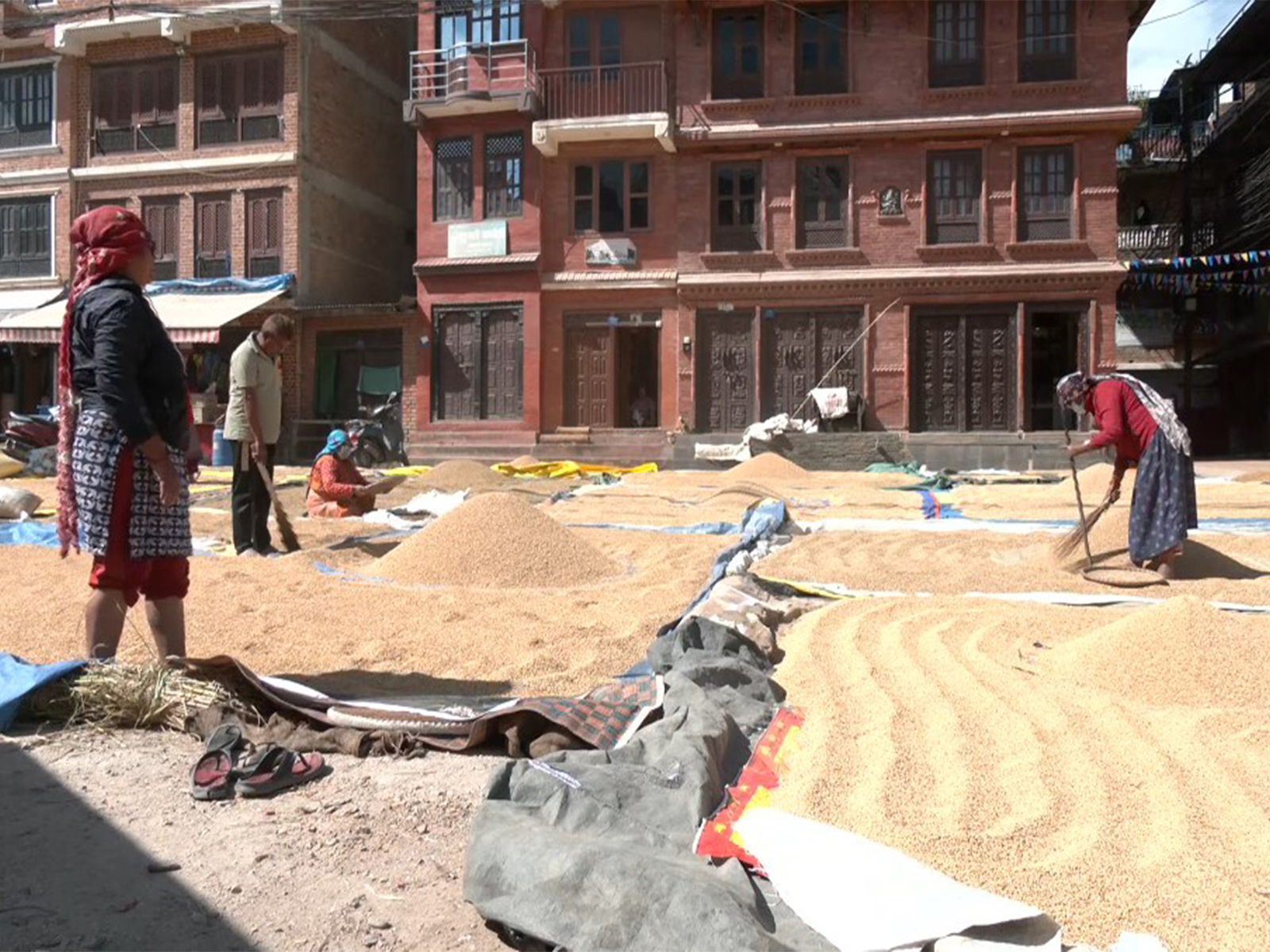
A similar scene is seen across the terraced slope of this medieval town on the outskirts of the Kathmandu Valley, where farmers work in groups to complete the work before the clouds gather pace.
Farmers are working in line with the warning issued by the National Disaster Risk Reduction and Management Authority to remain on high alert amid the possibility of heavy rainfall, lightning, windstorms and snowfall on October 13 and 14.
The Authority warned that moderate to heavy rainfall accompanied by thunderstorms, lightning and windstorms is likely in several areas of Koshi, Madhes, Bagmati, Gandaki and Lumbini provinces.
“The rainfall will obviously have a heavy impact on us while drying the paddy. If the paddy gets wet or exposed to moisture, then it will start to germinate, and then it will be of no use for us. Our entire year’s effort will simply go in vain,” another farmer, Binita Tuladhar, told ANI as she laid her paddy to dry in the front yard of her house.
Paddy harvesting is a critical seasonal activity in Nepal, where rice remains a staple crop and a major contributor to rural livelihoods and food security. In many areas of the Terai and mid-hills, fields have turned golden as crops reach maturity in late October.
For the Himalayan Nation, agriculture contributes 21.6% to 24.0% of the nation’s Gross Domestic Product (GDP). This sector solely provides primary livelihood and occupation for approximately 62% to 66% of Nepalese households and employs around 60% to 62% of the national workforce.
Paddy in particular contributed approximately 24% of the nation’s GDP, as it is cultivated on 1,375,872 hectares, as per the record of the Ministry of Agriculture and Livestock Development. Last year, the paddy production in Nepal reached 5,705,126 metric tons, as per the ministry. (ANI)
Nepali farmers bear the brunt of climate change and accelerating tropical cyclonic events