PNN
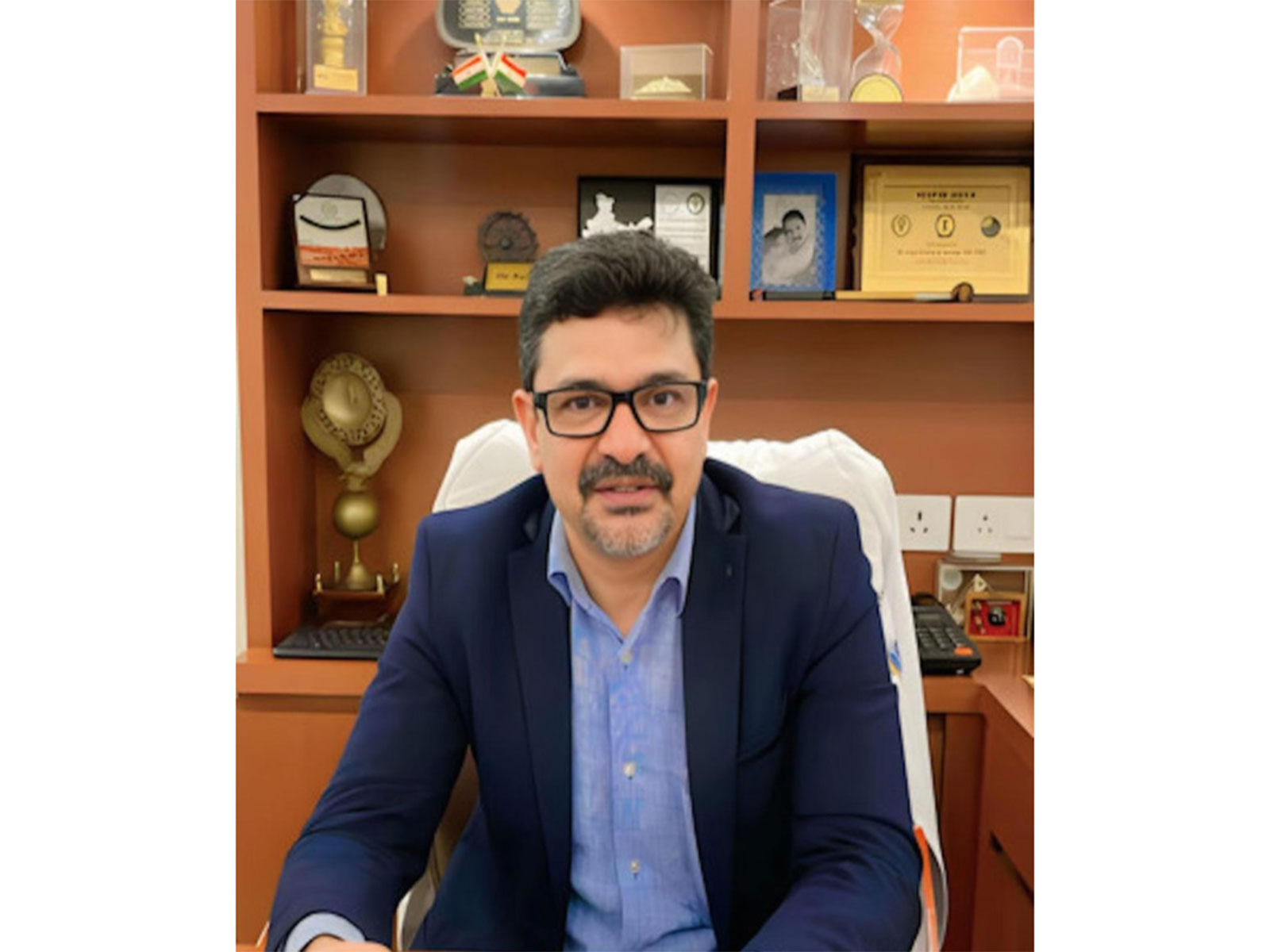
New Delhi [India], November 26: An Indian Army veteran, pioneering interventional pain physician and healthcare entrepreneur, Dr Pankaj N Surange has spent nearly three decades challenging conventional approaches to chronic pain. From building one of India's dedicated Pain and Spine hospitals to training a new generation of spine endoscopists, his journey reflects the emergence of Pain Medicine as a modern super-specialty.
A Soldier's Discipline, A Doctor's Vision
Some of the most meaningful transformations in healthcare begin not with a technological breakthrough, but with a physician questioning an established way of practising medicine.
For Dr (Maj) Pankaj N Surange, that question was simple: Why should patients suffering from chronic spinal pain have to choose between prolonged medication and major surgery when effective, minimally invasive alternatives might be available?
The answer would shape a professional journey spanning military service, international medical training, healthcare entrepreneurship, academic leadership and the advancement of interventional Pain Medicine in India.
An alumnus of Gajra Raja Medical College, Gwalior, Dr Surange began his career as a medical officer in the Indian Army. During his five years of military service, he participated in two significant military operations—Operation Vijay in 1999 and Operation Parakram in 2001–02.
The experience instilled a leadership philosophy centred on discipline, decisive action, accountability and working effectively with limited resources.
After leaving the Armed Forces, he joined the Indian Spinal Injuries Centre in New Delhi. It was here that he began recognising a significant gap in India's healthcare ecosystem: the limited availability of specialised interventional treatment for patients suffering from chronic pain and spinal disorders.
At a time when Pain Medicine was still largely practised as an extension of anaesthesiology, Dr Surange envisioned a future in which it would evolve into an independent, intervention-driven medical discipline.
To pursue that vision, he undertook advanced training in Interventional Pain Practice in Budapest, Hungary, earning the internationally recognised Fellowship in Interventional Pain Practice (FIPP). He subsequently pursued specialised training in minimally invasive spine endoscopy in Germany and South Korea.
These experiences became the foundation of his mission to bring internationally established interventional techniques into Indian clinical practice.
Building a Specialty When Few Believed in It
In 2012, Dr Surange took an unconventional professional decision: to dedicate himself to Pain Medicine and build a standalone institution focused on interventional pain and spine treatments.
The result was the Interventional Pain and Spine Centre (IPSC), initially established as a modest five-bed day-care facility in New Delhi.
The challenge extended beyond infrastructure and investment. There was limited awareness among patients, referring physicians and healthcare institutions about the scope of advanced interventional pain procedures. Many treatments were not routinely available, and establishing credibility for a relatively young specialty required sustained clinical and academic effort.
Dr Surange pursued a model built around accurate diagnosis, image-guided interventions, standardised protocols and shorter hospital stays.
Over the following decade, IPSC expanded its services, incorporating minimally invasive spine interventions, vertebral augmentation, radiofrequency neurotomy, neuromodulation and other specialised treatments for chronic spinal, musculoskeletal and neuropathic pain.
In 2021, this journey reached a significant milestone with the establishment of IPSC Pain & Spine Hospital in Dwarka, New Delhi—a dedicated single-specialty institution focused on advanced pain and spine procedures.
According to IPSC's publicly reported figures, the organisation has treated more than 40,000 patients and trained over 1,500 medical professionals through its educational initiatives.
For Dr Surange, however, the larger achievement lies in demonstrating that Pain Medicine can support an independent clinical, academic and institutional ecosystem.
His entrepreneurial outlook was further shaped by the Advanced Management Programme for Healthcare at the Indian School of Business, Hyderabad, where he strengthened his understanding of healthcare operations, financial sustainability and scalable institutional models.
Making Spine Endoscopy Part of Modern Pain Practice
One of Dr Surange's most significant contributions has been his sustained effort to promote Minimally Invasive Spine Endoscopic Pain Procedures (MisEpp) among appropriately trained Pain Physicians in India.
Traditionally, the management of disc prolapse, sciatica and selected spinal canal disorders often involved either prolonged conservative treatment or conventional spine surgery.
Advances in spinal endoscopy have created additional treatment possibilities for carefully selected patients.
Using specialised endoscopic instruments, imaging guidance and targeted surgical approaches, certain spinal conditions can be treated through small incisions with limited disruption to surrounding tissues.
Dr Surange has been particularly active in promoting two important techniques: transforaminal and interlaminar spine endoscopy.
In selected cases, these procedures may be performed under local anaesthesia or monitored anaesthesia care, allowing early mobilisation and shorter hospitalisation. For suitable patients, endoscopic decompression may also avoid the need for spinal instrumentation.
However, patient selection remains critical. Complex spinal instability, deformity or other conditions may still require conventional surgery, and successful outcomes depend on appropriate indications, procedural expertise and follow-up.
Dr Surange's advocacy goes beyond introducing another technique. He has worked to position spine endoscopy within the broader scope of modern interventional Pain Medicine—supported by structured training, defined competencies, interdisciplinary collaboration and evidence-based clinical protocols.
Through live operative workshops, cadaveric training programmes, scientific lectures and clinical demonstrations, he has helped increase awareness and professional exposure to endoscopic spine techniques across the country.
His emphasis has consistently been on developing a skill-based pathway that allows adequately trained physicians to expand their clinical capabilities while maintaining patient safety.
IPSC Varsity: Creating the Next Generation of Pain and Spine Specialists
Dr Surange recognised early that a new medical specialty cannot grow sustainably through a handful of experienced practitioners alone.
It requires institutions capable of teaching, assessing and mentoring the next generation.
That understanding led to the development of IPSC Varsity, a dedicated academic platform for training physicians in Pain Medicine, minimally invasive spine interventions and musculoskeletal procedures.
Its programmes combine theoretical learning with practical exposure, including clinical case discussions, MRI interpretation, fluoroscopic anatomy, instrument familiarisation, cadaveric workshops and live operative training.
Particularly notable is the structured Spine Endoscopy Fellowship, which focuses on developing practical competence in transforaminal and interlaminar techniques.
The programme incorporates online teaching, hands-on cadaveric workshops at advanced learning facilities in Bengaluru and supervised clinical exposure through live operative workshops in New Delhi.
IPSC Varsity also conducts a one-year Pain, Spine and Musculoskeletal Intervention Fellowship and shorter intensive clinical training programmes.
The fellowship initiative has grown into a continuing educational platform, drawing physicians seeking advanced procedural training from India and overseas.
Its larger purpose is to build a community of clinically competent Pain Physicians who can develop responsible, evidence-based practices in their respective regions.
For Dr Surange, education is therefore not separate from healthcare delivery. It is an essential mechanism for expanding access to specialist care.
The Travelling Spine Program: Taking Advanced Care Beyond Metropolitan Hospitals
While clinical innovation and specialist training remain central to Dr Surange's work, geographical access has emerged as another priority.
Advanced spine procedures tend to be concentrated in major metropolitan centres, often forcing patients from smaller cities to travel considerable distances for specialised treatment.
To address this challenge, IPSC developed the Travelling Spine Program, an initiative designed to extend specialist consultation and selected minimally invasive procedures through collaborations with hospitals outside its home institution.
The programme brings together visiting spine endoscopy specialists, local medical teams and partner hospitals. This approach enables patients to receive specialist evaluation closer to home while making use of existing hospital infrastructure.
The model also creates opportunities for collaboration and knowledge transfer between visiting specialists and local physicians.
Having developed the programme across multiple Indian cities, IPSC extended it internationally through a collaboration with Spring Hill Hospital in Dhaka, Bangladesh, in 2026 for MisEpp Spine Endoscopy Pain procedures.
The programme represents an important evolution in Dr Surange's thinking: specialist healthcare does not always require the construction of an entirely new hospital. With appropriate infrastructure, trained personnel, patient selection and continuity-of-care arrangements, advanced services can potentially be delivered through institutional partnerships.
It is a philosophy that also informs his broader vision of building a scalable network of specialist-led Pain and Spine centres.
Championing the Super-Specialty Status of Pain Medicine
Beyond clinical practice and entrepreneurship, Dr Surange has been actively involved in the professional development of Pain Medicine in India.
As a former Honorary Secretary of the Indian Society for the Study of Pain (ISSP) and former chairman of the World Institute of Pain's regional section, he has contributed to professional education, specialty awareness and discussions around the standardisation of interventional procedures.
His appointment as Registrar of the Indian Academy of Pain Medicine (IAPM) in February 2025 marked another chapter in his academic leadership.
Pain Medicine in India has undergone an important transition. Once primarily associated with anaesthesia-led pain clinics, it now has increasingly structured postgraduate and advanced training pathways, including DM and FNB programmes in Pain Medicine.
This progress reflects the sustained collective work of professional societies, academic institutions, regulators and several generations of Pain Physicians.
Dr Surange has been among the clinicians advocating for a stronger identity for Pain Medicine as a distinct super-specialty, with clearly defined competencies, ethical standards and independent career pathways.
As Registrar of IAPM, his priorities include strengthening fellowship training, developing advanced procedural certification, supporting Indian clinical guidelines and promoting uniform educational standards.
A particularly important area is competency-based certification for physicians undertaking advanced procedures such as spine endoscopy, vertebral augmentation and implantable pain therapies.
He believes that specialised skills should be supported by credible assessment systems, rather than training certificates alone.
This emphasis on certification, professional accountability and standardised protocols is becoming increasingly relevant as interventional Pain Medicine expands into newer clinical settings.
The challenge ahead is not merely to create more specialists, but to ensure that growth is accompanied by consistent training standards, patient safety and scientific credibility.
A Healthcare Entrepreneur Looking Beyond Conventional Hospital Models
Dr Surange's career also reflects a broader transformation in Indian healthcare entrepreneurship.
Unlike conventional hospital expansion driven largely by physical infrastructure, his emerging strategy places specialist expertise, trained physicians, standardised procedures and institutional partnerships at the centre of healthcare delivery.
His vision is to develop a network of Pain and Spine centres embedded within existing hospitals (Hospital-in-Hospital Model), with centralised academic support, clinical governance and operating systems.
Such a model, if successfully validated and scaled, could reduce infrastructure requirements while allowing specialist care to reach underserved regions.
An important asset supporting this ambition is the network of physicians trained through IPSC's academic programmes.
It represents a foundation for building a physician-led healthcare ecosystem in which clinical expertise, professional ownership and sustainable economics work together.
A Legacy Beyond the Operating Room
From serving on India's military frontiers to developing a specialised healthcare institution, Dr (Maj) Pankaj N Surange's journey has been defined by his willingness to pursue an unconventional path.
His contributions span clinical practice, the wider adoption of minimally invasive spine procedures, postgraduate medical education, professional advocacy and new models of specialist healthcare delivery.
The transformation he has helped advance is larger than an individual procedure or institution. It is about changing the way chronic pain is understood, treated and taught.
For India's evolving Pain Medicine community, the future will depend on stronger evidence, accessible specialist services, structured certification and meaningful collaboration across disciplines.
Dr Surange continues to work toward that future.
(ADVERTORIAL DISCLAIMER: The above press release has been provided by PNN. ANI will not be responsible in any way for the content of the same.)
From the Battlefield to the Frontiers of Pain Medicine: How Dr (Maj) Pankaj N Surange Is Transforming Spine Care in India