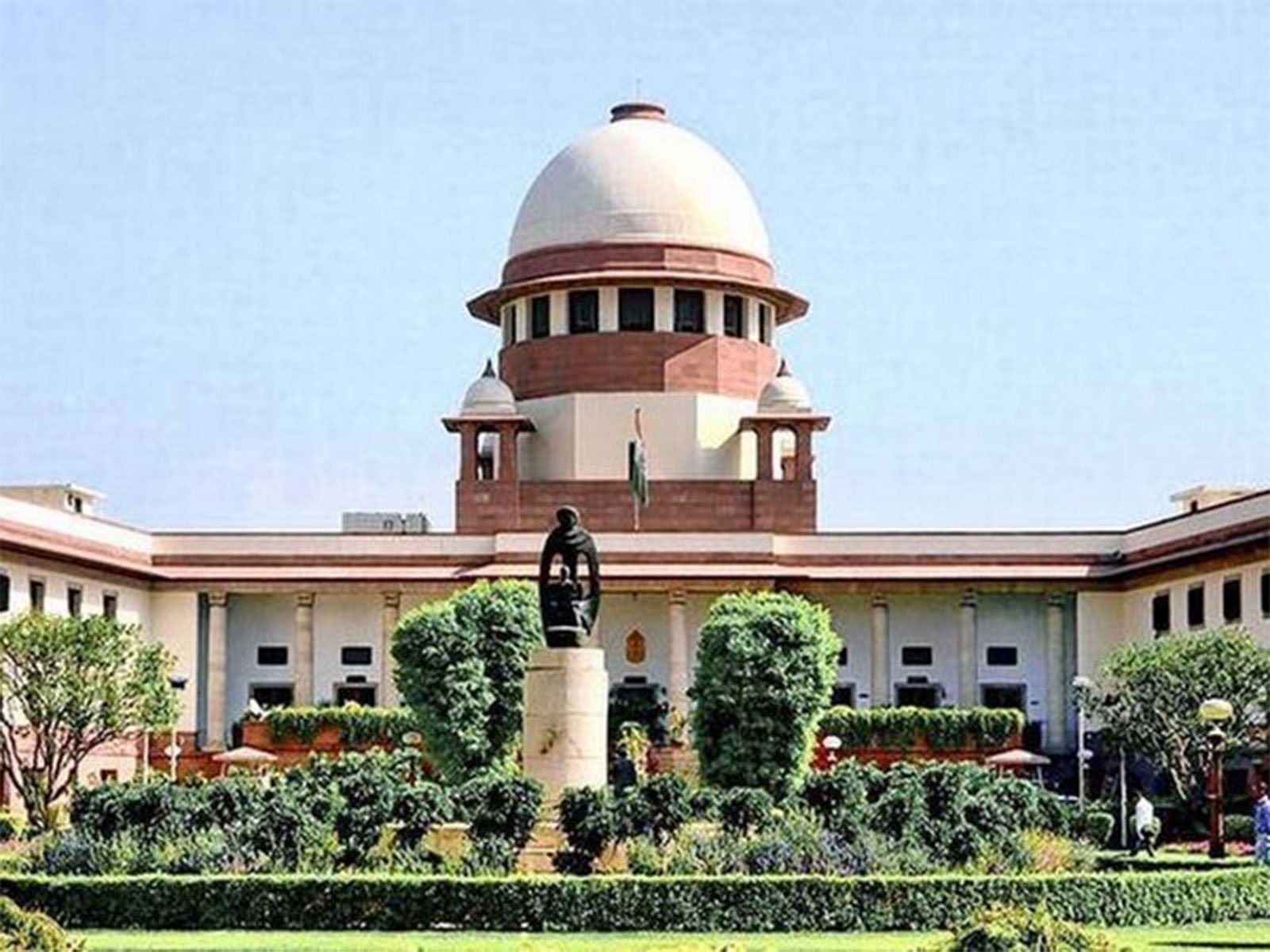
New Delhi [India], November 23 (ANI): The Supreme Court on Monday strongly reprimanded a Bihar sessions judge for exceeding his powers while convicting a police officer for contempt of court for failing to register an FIR on his directions.
The Court questioned the judge’s understanding of contempt law and said disobedience of a judicial direction could not automatically be treated as an offence committed in the face of the court.
A Bench of Chief Justice Surya Kant and Justices Joymalya Bagchi and V Mohana said the judge had failed to appreciate the distinction between an offence committed in the courtroom and non-compliance with a judicial direction.
Justice Bagchi explained that the power to summarily punish someone for an offence committed in the face of the court could be exercised in situations such as assaulting or abusing someone in the courtroom or refusing to leave despite the judge’s directions.
A police officer’s failure to register an FIR on a court’s direction, however, did not fall within the same category, the judge was told.
The Bench asked the judge to understand the scope of Section 384 of the Bharatiya Nagarik Suraksha Sanhita (BNSS) and the corresponding provision under the old Code of Criminal Procedure (CrPC), Section 345, before exercising such powers.
Justice Bagchi was particularly critical of the judge’s decision to summon the Superintendent of Police (SP) and hold him guilty of contempt on the same day.
“We are really surprised at your understanding of the law. If someone slaps another person or abuses the Court, or refuses to leave the courtroom when directed, that is an offence committed in the face of the Court. But if we direct someone to register an FIR and they do not do so, it does not amount to an offence committed in the face of the Court,” Justice Bagchi observed.
The judge was also criticised for taking an aggressive approach instead of allowing the High Court to examine the matter. While acknowledging that he may have been acting with the intention of securing justice, Justice Bagchi said judicial authority had to be exercised within procedural limits.
“We appreciate your effort to do justice, but we are governed by procedural constraints and discipline. You were so eager that you summoned the Superintendent and convicted him on the same day. Were you within your jurisdiction to do this? You must also stay your hands. Enough of adventure,” the judge was told.
The Bench also questioned the sessions judge’s objection to an inspecting judge summoning him in an administrative capacity. Justice Bagchi pointed out that the sessions judge had himself summoned the District Magistrate and the SP, treated their non-appearance as an offence committed in the face of the court and proceeded to convict and sentence the police officer.
The Court advised the judge to undergo further training at the National Judicial Academy and cautioned him against acting like a ‘Bahubali’ while exercising judicial powers. Justice Bagchi said a judge must understand the limits of his jurisdiction rather than assume powers beyond what the law permits.
The observations came while hearing a petition filed by the sessions judge challenging the proceedings arising from his handling of the contempt case. The Supreme Court disposed of the plea, granting him liberty to approach the High Court and requesting that his case be considered sympathetically.
The controversy originated in a 2023 judgment in which the sessions judge had directed the then SP of Rohtas district in Bihar to register a criminal case against a man accused of giving false evidence.
After the direction was allegedly not complied with, the judge initiated criminal contempt proceedings against the police officer in August this year. The officer, who has since been posted in Saran district of Bihar, was held guilty of contempt in September and fined a symbolic amount of ₹1. (ANI)
"Enough of adventure": SC censures Bihar judge for ‘Bahubali-like’ conduct in convicting SP for contempt