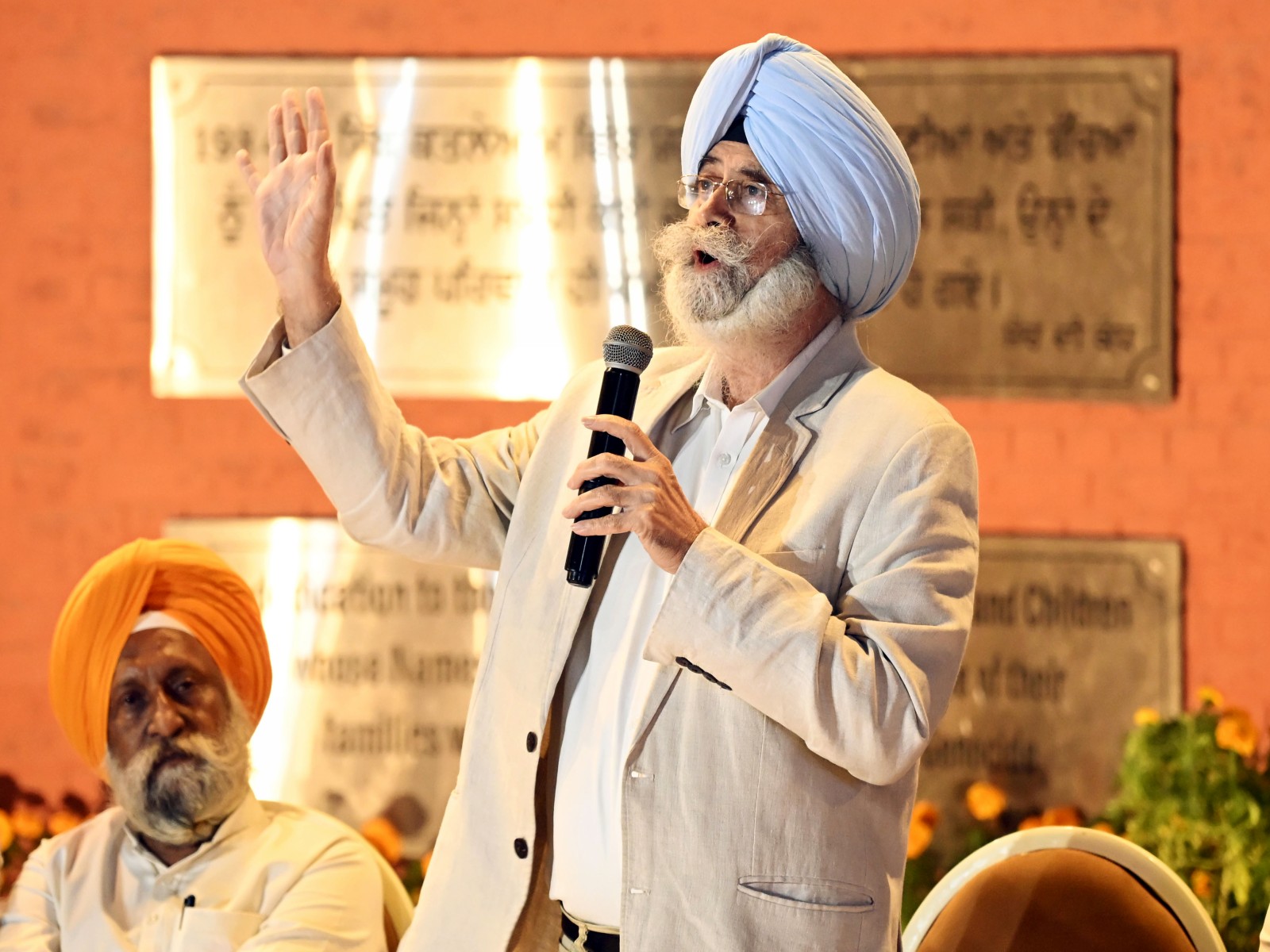
New Delhi [India], November 21 (ANI): Senior Advocate and BJP leader HS Phoolka has urged Union Home Minister Amit Shah to intervene over the alleged failure of the Punjab Government to promote two low-cost technologies developed by Punjab Agricultural University (PAU), Ludhiana, which can help eliminate stubble burning while reducing the financial burden on farmers.
In a letter dated November 16, Phoolka has highlighted the potential of PAU’s ‘Triple Zero (000) Technology’ and ‘Mitter Seeder’, alleging that despite successful trials and their reported benefits for farmers, the state government has continued to promote expensive Super Seeders.
Pointing to the disparity in the adoption of these machines, Phoolka said Punjab has more than 60,000 Super Seeders, whereas only five Triple Zero technology machines and 24 Mitter Seeders are available across the state.
He said the Triple Zero machine costs approximately Rs 70,000 to Rs 80,000 and can save farmers Rs 4,000 to Rs 5,000 per acre during wheat sowing. In comparison, a Super Seeder costs around Rs 2.75 lakh to Rs 3 lakh and requires a 65-horsepower tractor for its operation.
According to Phoolka, the Punjab Government provides a subsidy of Rs 1 lakh for each Super Seeder and has already extended subsidies for more than 60,000 such machines. He said the government continues to subsidise the purchase of another 2,000 to 3,000 machines every year.
In his letter, Phoolka claimed that nearly 90 per cent of farmers using Super Seeders burn the paddy stubble before sowing wheat, defeating the objective of preventing crop residue burning. He said farmers using the Triple Zero technology do not need to burn stubble.
Developed by PAU, the Triple Zero technology integrates paddy harvesting, straw management and wheat sowing into a single operation. A special attachment fitted to an existing combine harvester enables simultaneous sowing of wheat while harvesting paddy, eliminating the need for separate field operations.
The three zeros in the technology’s name signify zero additional field operations, zero requirement for a separate machine for residue management and wheat sowing, and zero time gap between paddy harvesting and wheat sowing.
The technology retains paddy straw in the field as mulch, helping suppress weed growth and improve soil conditions rather than requiring farmers to burn the residue.
Phoolka has also cited a research study conducted by PAU scientists during the 2023-24 and 2024-25 crop seasons, which evaluated the technology against other wheat-sowing methods, including Surface Seeder, surface seeding in rows and Happy Seeder.
The study found that the Triple Zero technique recorded the highest wheat grain yield of 49.3 quintals per hectare, compared with 48 quintals under Surface Seeder, 46.8 quintals under surface seeding in rows and 45.4 quintals under Happy Seeder.
It also recorded the lowest cost of cultivation at USD 395.5 per hectare and the highest net returns of USD 1,326.7 per hectare, with a benefit-cost ratio of 3.35.
The research further found that the technology reduced diesel consumption and machinery-related energy requirements while achieving a lower carbon footprint than the other methods evaluated.
Phoolka also flagged the lack of government support for another PAU-developed machine, the Mitter Seeder, which costs between Rs 1.5 lakh and Rs 2 lakh. He said the machine can operate with a 35-horsepower tractor, unlike the Super Seeder, which requires a more powerful and expensive 65-horsepower tractor.
He claimed that despite successful trials conducted several years ago, the Punjab Government has not provided any subsidy for the Mitter Seeder, resulting in its limited availability in the state.
Recalling a visit to a PAU demonstration farm in village Vidhipur, Gurdaspur district, on March 1, 2025, Phoolka said he had inspected the crop sown using the Triple Zero technology along with the university’s Vice-Chancellor, Director of Extension Education and Punjab’s Chief Agricultural Officer.
He said PAU Vice-Chancellor Dr SS Gosal had subsequently briefed the media about the technology’s benefits, including the elimination of stubble burning, early wheat sowing, 20 per cent savings in seed consumption, irrigation water and fertiliser use, and increased straw yield.
Phoolka further informed Shah that he had raised the issue before the Supreme Court in a pollution-related matter, following which the court directed the Punjab Government to submit the trial results of the Triple Zero technology.
However, he alleged that the state government did not submit the results of the trials of this technology and instead placed the results of another machine before the court.
In his communication, Phoolka alleged that the promotion of expensive machinery over more economical alternatives developed by PAU raised questions about the state’s approach towards tackling stubble burning. He also alleged that certain elements in the machinery sector and government officials were influencing the promotion of subsidised equipment.
Urging the Union Home Minister to intervene, Phoolka said the technologies developed by PAU scientists could provide a practical solution to stubble burning while protecting soil quality, reducing cultivation costs and improving farmers’ income.
He requested Shah to look into the matter and ensure that the state government promotes these technologies and provides the necessary incentives to farmers for their wider adoption. (ANI)
BJP's HS Phoolka writes to Amit Shah over Punjab's failure to promote PAU technologies to curb stubble burning