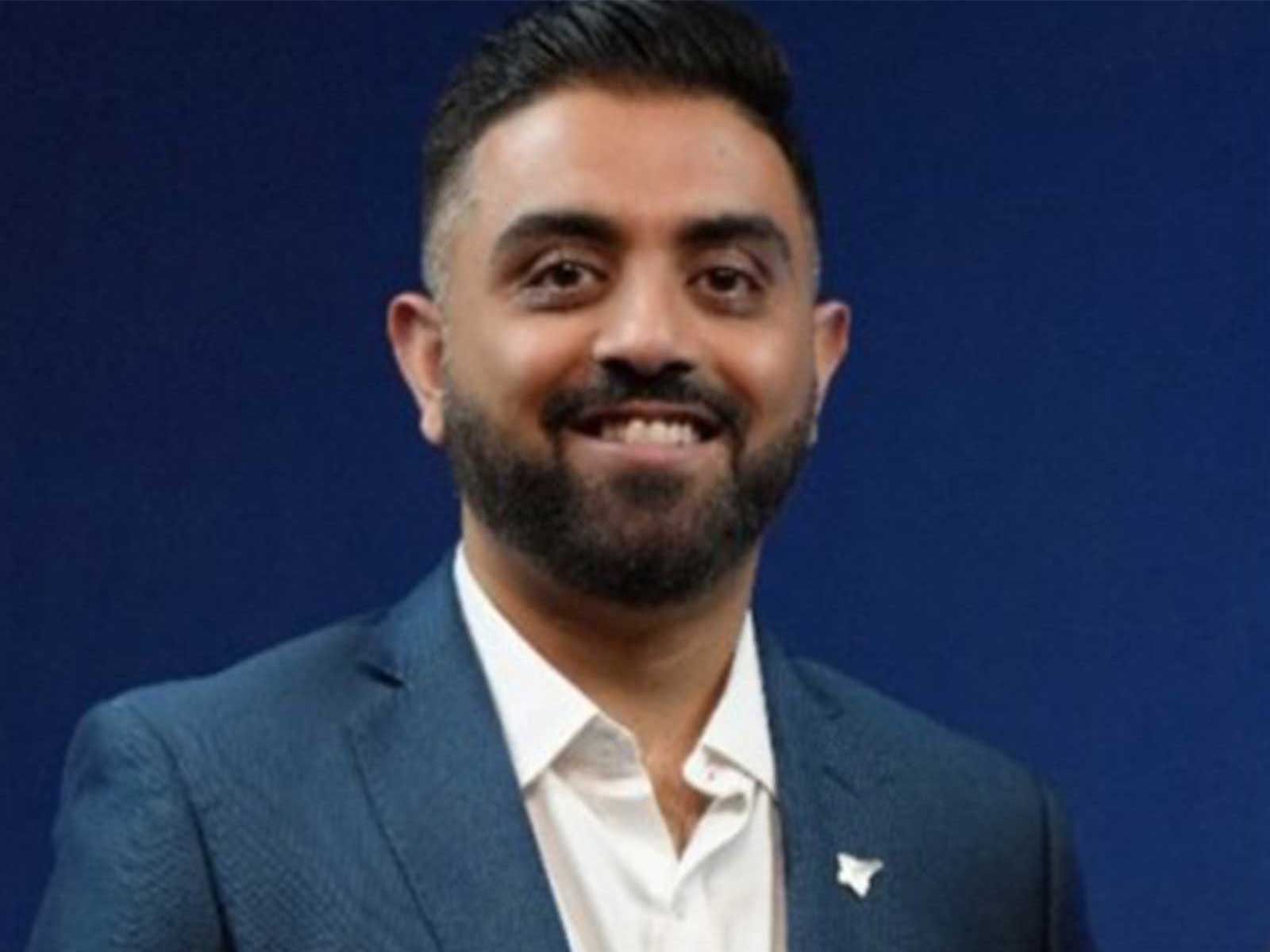
Geneva [Switzerland] September 12 (ANI): On the sidelines of the 63rd session of the United Nations Human Rights Council (UNHRC), Dr Holly Shaw, Representative of ICN ECOSOC, and William McEwan Benatar, Volunteer at Akshar Foundation, highlighted the achievements of the Indian education system and the contribution of the Akshar Foundation in developing an educational model that combines traditional knowledge with contemporary approaches.
Speaking about India’s approach to education, Dr Holly Shaw said that combining traditional approaches with contemporary practices is essential to addressing the Sustainable Development Goals (SDGs). She said there is no need to replace or discard traditional wisdom, values and practices while adopting contemporary approaches, and instead, the two should be integrated to create a holistic solution for people and the planet.
Shaw said there is both an art and a science in integrating tradition with modernity and contemporary practices, describing Akshar Foundation as an “extraordinary exemplar” of this approach. According to her, such integration can help not only in meeting the SDGs but also in creating a world where all living beings can flourish.
William McEwan Benatar, Volunteer at Akshar Foundation, also emphasised the potential of combining traditional knowledge with modern science and technology. He said India possesses a vast body of knowledge developed by communities over generations, including knowledge related to agriculture, water management, traditional crafts, medicine and the sustainable use of natural resources.
Benatar said traditional knowledge can be approached with respect as well as scientific validation, allowing modern science and technology to test, improve and scale practices where appropriate. He cited the example of combining local agricultural knowledge with modern technology to potentially make farming more sustainable and resilient.
He also pointed to the role of digital tools in preserving indigenous knowledge and making it accessible to younger generations. At the same time, Benatar cautioned against assuming that everything traditional is automatically sustainable, stressing that the opportunity lies in bringing traditional knowledge and modern science together, testing what works and applying it responsibly.
According to Benatar, this approach can contribute to several SDGs, including quality education, decent work, reduced inequalities, sustainable communities and responsible consumption. He said innovation does not necessarily mean starting from scratch and can instead involve taking existing community knowledge, combining it with modern science and technology and creating new opportunities for it to generate impact.
Benatar also highlighted the complementary roles of governments and NGOs in education. He said governments have the scale, infrastructure and capacity to integrate successful programmes into public education systems, while NGOs often have greater flexibility to experiment, work closely with communities and identify approaches that work on the ground.
He said NGOs should not create parallel education systems but should instead develop, test and demonstrate approaches that governments can eventually scale up. As an example, he said an NGO could pilot a practical learning programme, measure its outcomes, train teachers and document its effectiveness, after which the government could use that evidence to integrate successful elements into the larger public education system.
Benatar stressed that communities themselves should also be involved in the process, with parents, teachers, local institutions and children participating as stakeholders rather than merely being treated as beneficiaries.
He further highlighted the importance of practical and vocational learning, saying learning should not be separated from doing. According to him, practical activities can help children develop academic knowledge along with problem-solving, creativity, teamwork and confidence.
He said this approach is particularly relevant in a changing employment environment where employers and entrepreneurs require people capable of solving real-world problems rather than simply reproducing information from textbooks.
Referring to Akshar Foundation, Benatar said children begin to see themselves as capable of creating and repairing things when they are given opportunities to work with tools, technology and practical problems.
He argued that vocational and practical education should not be treated as a second-class alternative to academic education, but should complement it. He also said India’s approach is valuable because education cannot follow a single formula in a country as diverse as India.
Benatar highlighted the emphasis on learning in the mother tongue, the integration of Indian knowledge systems and the introduction of vocational education at an earlier stage as approaches intended to make education more relevant to children’s contexts and future employment.
However, he stressed that implementation is as important as policy, given India’s linguistic, geographical and socio-economic diversity. The challenge, he said, is to take these ideas from policy documents and implement them effectively in classrooms at scale.
He clarified that India should not necessarily be seen as providing a model that every country can simply copy. Instead, he said the National Education Policy (NEP) 2020 offers principles that other countries can adapt to their own realities, particularly the idea of rooting education in local culture while preparing children for a rapidly changing technological world. (ANI)
At UNHRC, experts praise India’s education model, Akshar Foundation’s tradition-modernity approach