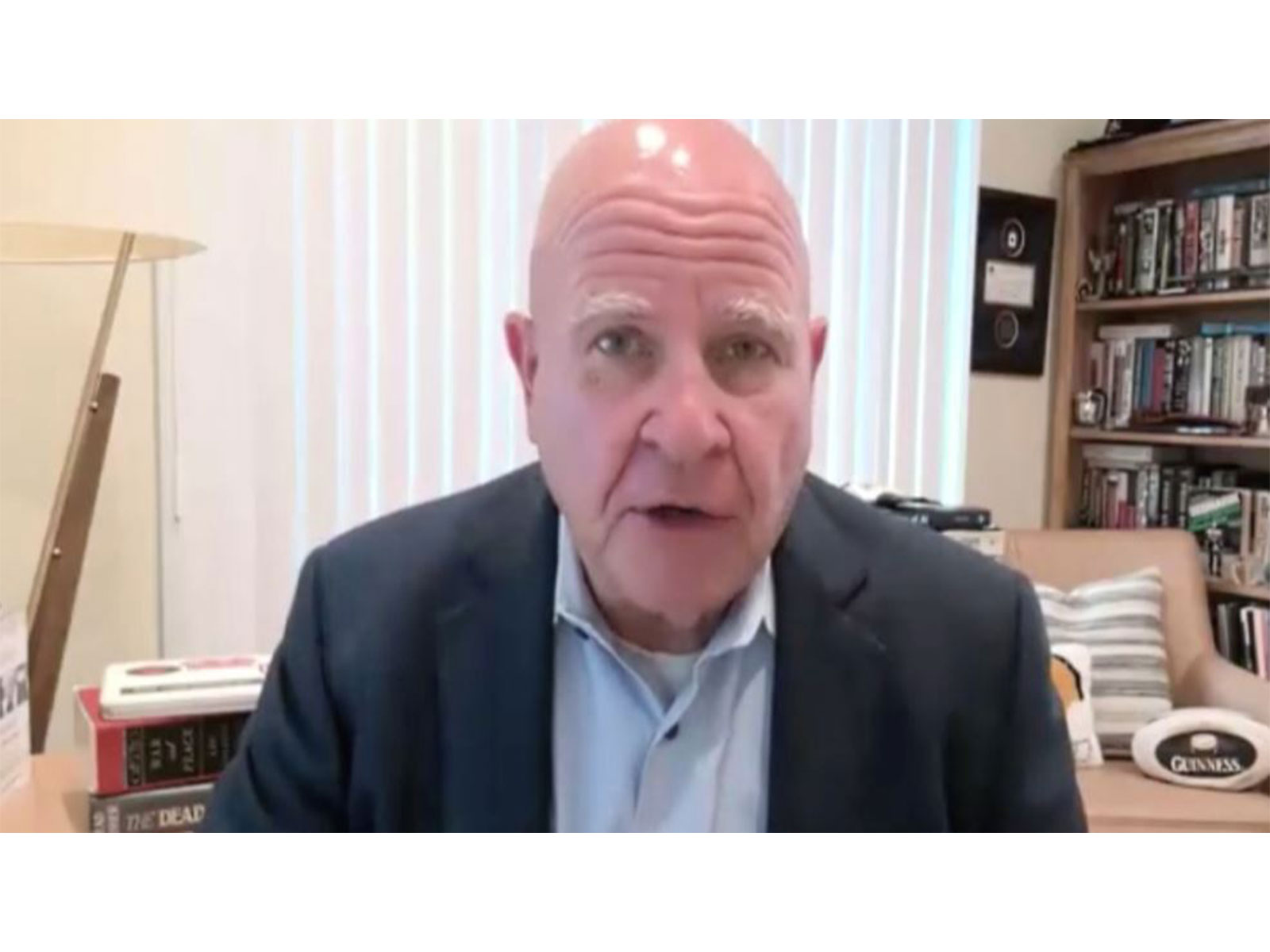
New Delhi [India], September 18 (ANI): Former US National Security Advisor Lt Gen (Retd) HR McMaster on Friday outlined the severe security challenges confronting Saudi Arabia and the wider Gulf region.
Speaking with ANI, McMaster stated that Saudi Crown Prince Mohammed bin Salman is in a complex geopolitical position as heightened regional insecurity directly threatens Riyadh's ambitious economic transformation plans under Vision 2030.
Addressing the impact of regional destabilisation and the security arrangements Riyadh has pursued, including alliances with Egypt, Turkiye, and Pakistan, such as the Mecca Pact, McMaster stressed that economic advancement cannot occur without foundational regional stability.
"Not only Saudi infrastructure, but Mecca came under attack. And so I think what you're seeing is the crown prince of Saudi Arabia in a difficult position because his economic model and vision, as you mentioned, as well as the vision of the Emiratis, really depend on an environment of safety and security," said McMaster.
On doubts over US security guarantees, McMaster noted that Riyadh may have concerns about the long-term reliability of Washington's commitments.
"If they want to be financial hubs, if they want to be a centre for compute power and data centres and the AI revolution and all of the aspects of this vision. And if you're the crown prince, you know, you're looking over your shoulder, hey, who's got my back?" said McMaster.
He added regarding US policy dynamics, "And you're not sure if the United States is going to see it through because we've had this ceasefire war. You know, you had the MOU. You have, you know, with President Trump. He can make tough decisions, risky decisions like he did in February. But he also has this impulse toward reciprocity. Hey, well, you know, you should defend yourselves too, you know? And so I think he has doubts about that."
On Iran's strategy to divide the Gulf, McMaster said Tehran is actively exploiting these security doubts to disrupt Gulf cohesion by selectively targeting nations.
"What you're seeing is the Iranians trying to play up those doubts to try to divide the Gulf states from each other. If you look at the recent attacks, who are they attacking? They're attacking the Saudis. Hey, but not the Emiratis this time. Not the Qataris this time. And so what they want to do is divide the Gulf states such that they don't have unified resolve against Iran," said McMaster.
Highlighting the disparity in regional strikes, McMaster contrasted attack figures to illustrate the intensity of strikes targeting regional partners over time.
"UAE has been hit more than Israel. Yes, yes. By many orders of magnitude. I think it was 600 against Israel and 3,000 against the Emiratis," he said.
On threats to energy infrastructure, McMaster said that while minor pipeline breaches can be managed, attacks on critical, hard-to-replace assets pose existential risks to regional economic goals.
"I think deep down, the Gulf state leaders know that this regime has to end, but really what they don't want is to suffer more losses, especially in energy infrastructure that is difficult to replace. The pipeline attack, not that big of a deal in my view, but if they go after, you know, natural gas infrastructure, for example, and, and, refining capacity and, you know, these, these, these take much longer to repair. They want to get through this phase," added McMaster.
McMaster’s assessment underlines Saudi Arabia’s security concerns within the wider contest over the Gulf’s stability and its economic future as Riyadh strives to advance an ambitious transformation while facing attacks on critical infrastructure and uncertainty over regional security guarantees. (ANI)
"Who's got my back?": Ex-US NSA on Saudi Crown Prince's dilemma as security threats jeopardise Vision 2030, Mecca Pact alliances