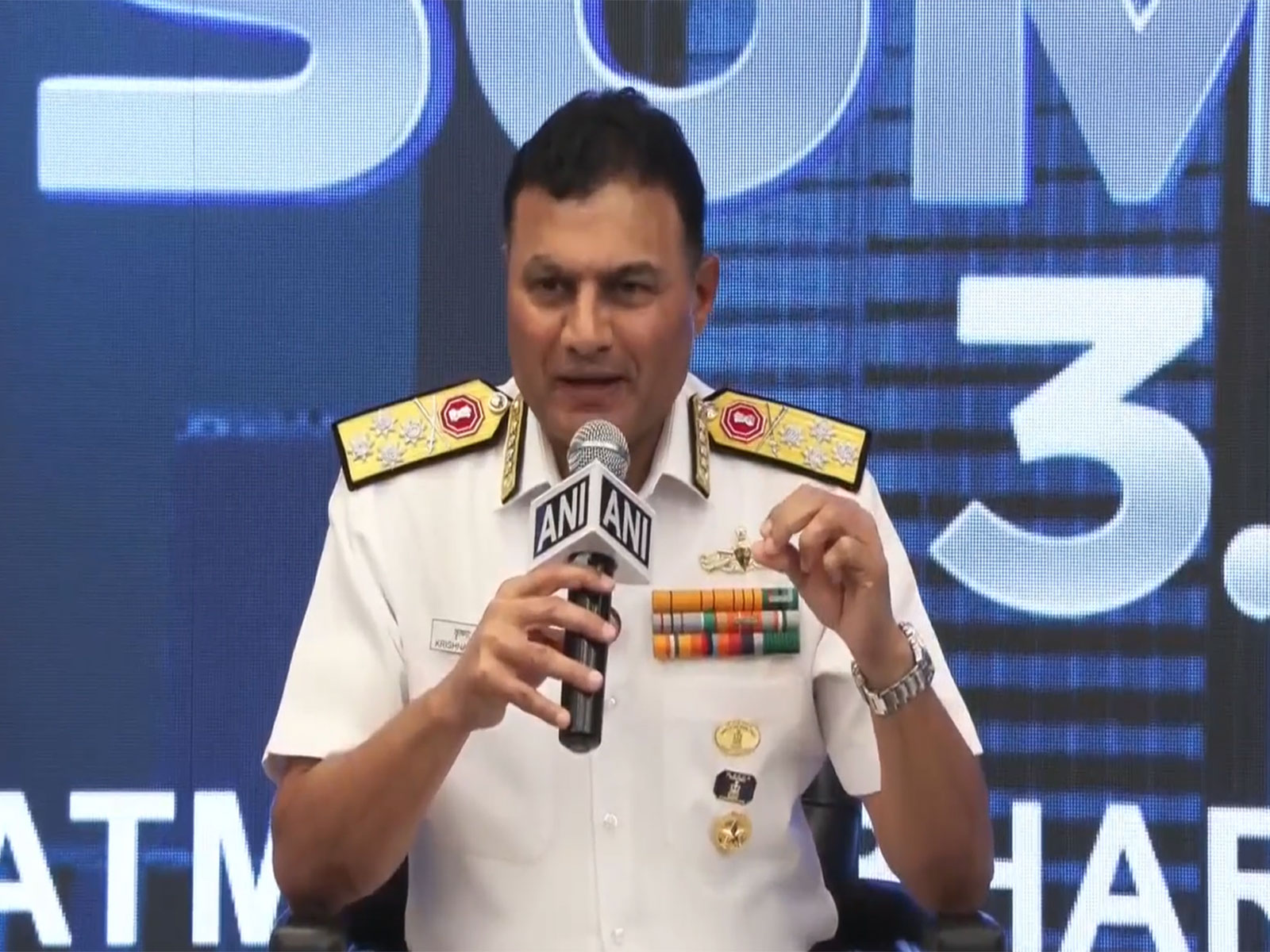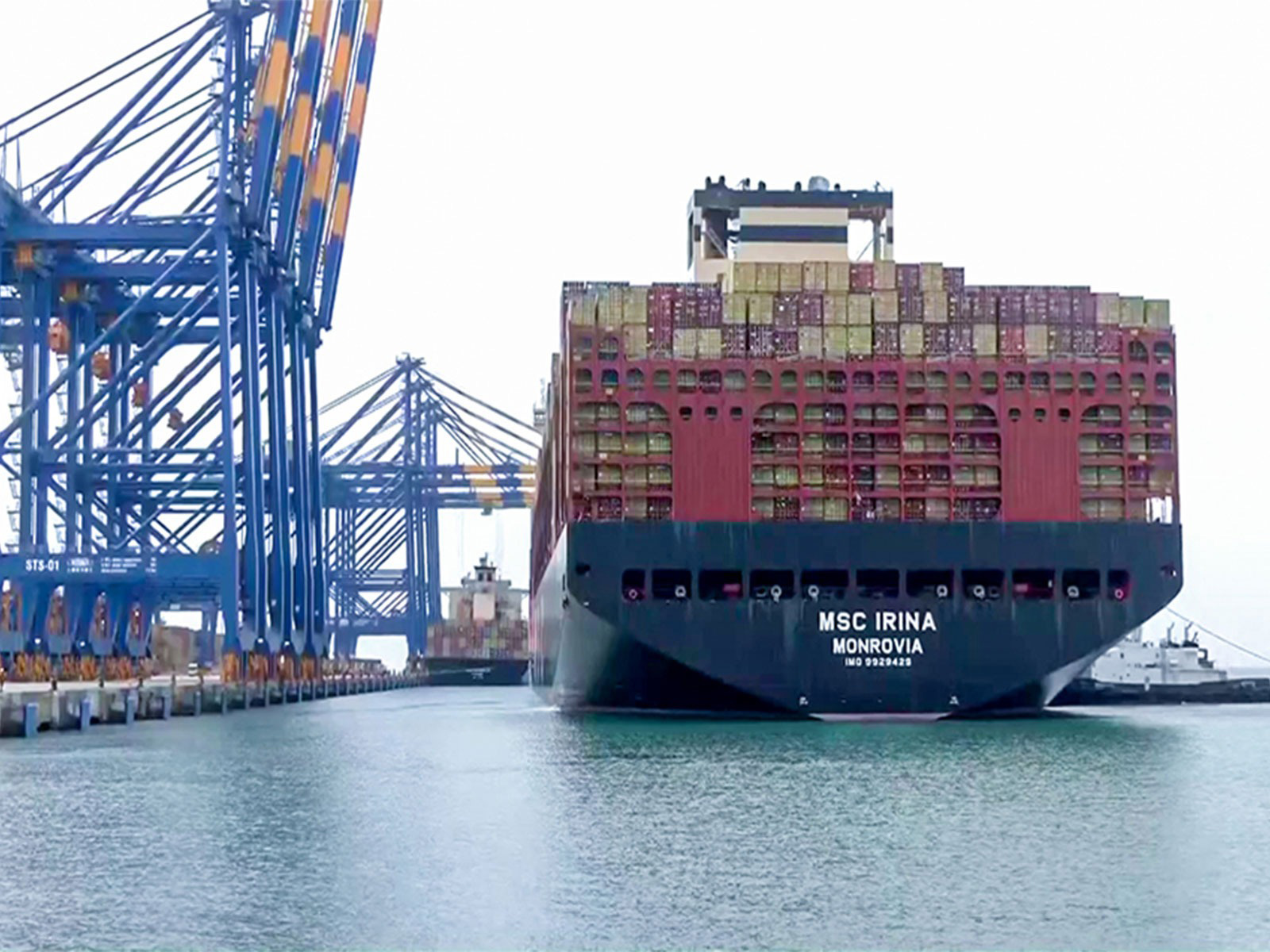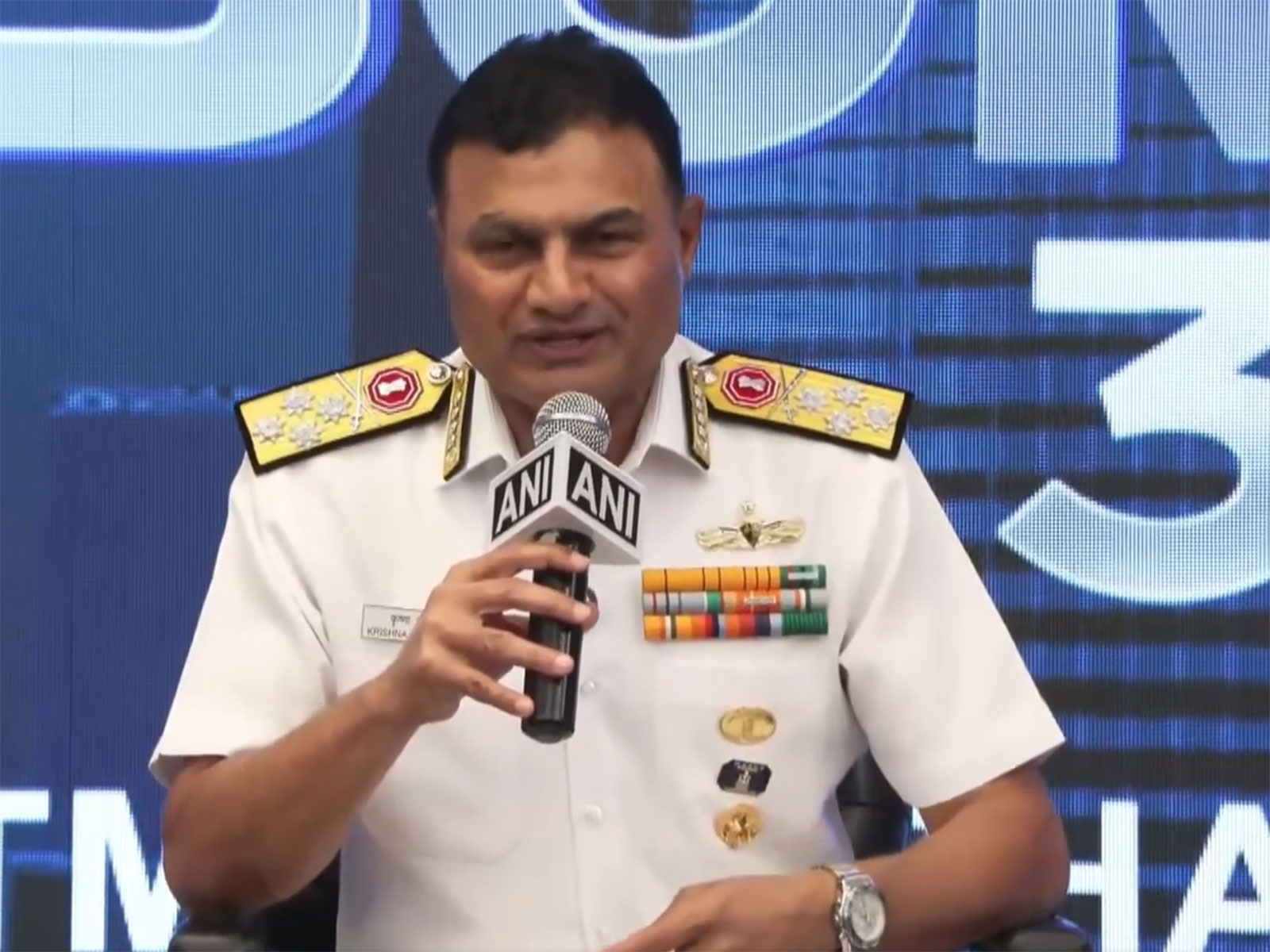
New Delhi [India], November 16 (ANI): Chief of Naval Staff Admiral Krishna Swaminathan on Monday explained why Indian Navy ships are deployed near the Strait of Hormuz, stating that the primary objective is to reassure Indian merchant vessels, provide assistance when required and escort them safely through waters that have largely been seen as a battle zone.
Addressing the ANI National Security Summit 3.0 in the national capital, Admiral Swaminathan said the Indian Navy has deployed ships in the North Arabian Sea as part of Operation Urja Suraksha, with a specific vessel stationed near the mouth of the Gulf of Oman to monitor maritime movements and assist Indian merchant ships exiting the Strait of Hormuz.
He said the deployed vessel undertakes regular patrols, remains on station and observes developments in the area to ensure that Indian merchant vessels can seek assistance whenever necessary.
"Several times there have been requests for help and we've deployed our ship largely on a mission to assure and reassure Indian merchant vessels about the Indian Navy's presence and should anybody need any assistance, when they exit from the Strait of Hormuz, we are there and we escort them through what has largely been seen as a battle zone and get them out of safety," the Navy Chief said.
Explaining the vulnerability of commercial vessels operating in conflict-affected maritime regions, particularly narrow waterways such as the Strait of Hormuz and the Red Sea, Admiral Swaminathan said geographical constraints make ships more susceptible to attacks.
"The Red Sea, when you come out of the Strait of Bab el-Mandeb, it's a very, very narrow passage, as indeed is the Strait of Hormuz. It's a very narrow passage, so ships need to necessarily go there, and that's when they're extremely vulnerable, and you can attack them from both sides," he said.
He further explained that merchant vessels are not designed for combat and generally do not carry weapons to defend themselves against attacks.
"A merchant ship is not designed to guard itself. A merchant ship does not carry weapons. It is not difficult to hit a merchant ship with anything. Any small explosive could disable a merchant ship," he said.
On the growing use of drones in maritime warfare, the Navy Chief said their effectiveness depends significantly on geographical conditions and the nature of the vessels being targeted.
Drawing comparisons with the Red Sea, the Strait of Hormuz and the Black Sea, where Ukrainian forces have carried out drone attacks against Russia's Black Sea Fleet, he said the effectiveness of such attacks should not be generalised across different maritime theatres.
"At sea, there are no boundaries. The sea is very, very vast. You can keep moving wherever you have to move. And you know, if you have to attack somebody, you need to have weapon systems of huge ranges because, you know, ships could be 500, 600 miles apart," he said.
He added that the situation changes in restricted waterways, where ships have limited room to manoeuvre and are more exposed to attacks.
"Where drones matter, and exactly as you said, ma'am, in the Red Sea and in the Strait of Hormuz, those are very, very restricted geographies. In fact, the Black Sea as well, where the Russian Black Sea fleet had to face a lot of drone attacks from the Ukrainians. Those are localized waters, and you know, that's where geography dictates everything," he said.
He cautioned against extrapolating the effectiveness of drones in these conflict zones to other maritime situations, saying the nature of the geography and the defensive capabilities of the vessels involved must be taken into account.
"So we don't want to extrapolate from that situation on some other situation where such a capability may not be as effective. So it's a combination of geography, it's a combination of the defensive defenselessness of the ship," he said.
The Navy Chief, however, acknowledged the growing importance of drones in modern warfare and said the Indian Navy was investing in the technology.
"There's no question that drones are very important items, and we are investing a lot in drones as well," he added. (ANI)
We are there to escort them to safety: Navy Chief Admiral Krishna Swaminathan on deployment of ships near Hormuz