Washington, DC [US], August 20 (ANI): The United States military has quietly established a maritime shipping corridor across the Strait of Hormuz to facilitate the transport of millions of barrels of crude oil daily, even as the conflict with Iran continues in a stalemate, reported news outlet Axios, citing two US officials.
The development comes shortly after US President Donald Trump ruled out extending a fragile 60-day ceasefire agreement with Tehran, asserting that the Strait of Hormuz remains open and that Washington exercises "total control" over the strategic maritime passage.
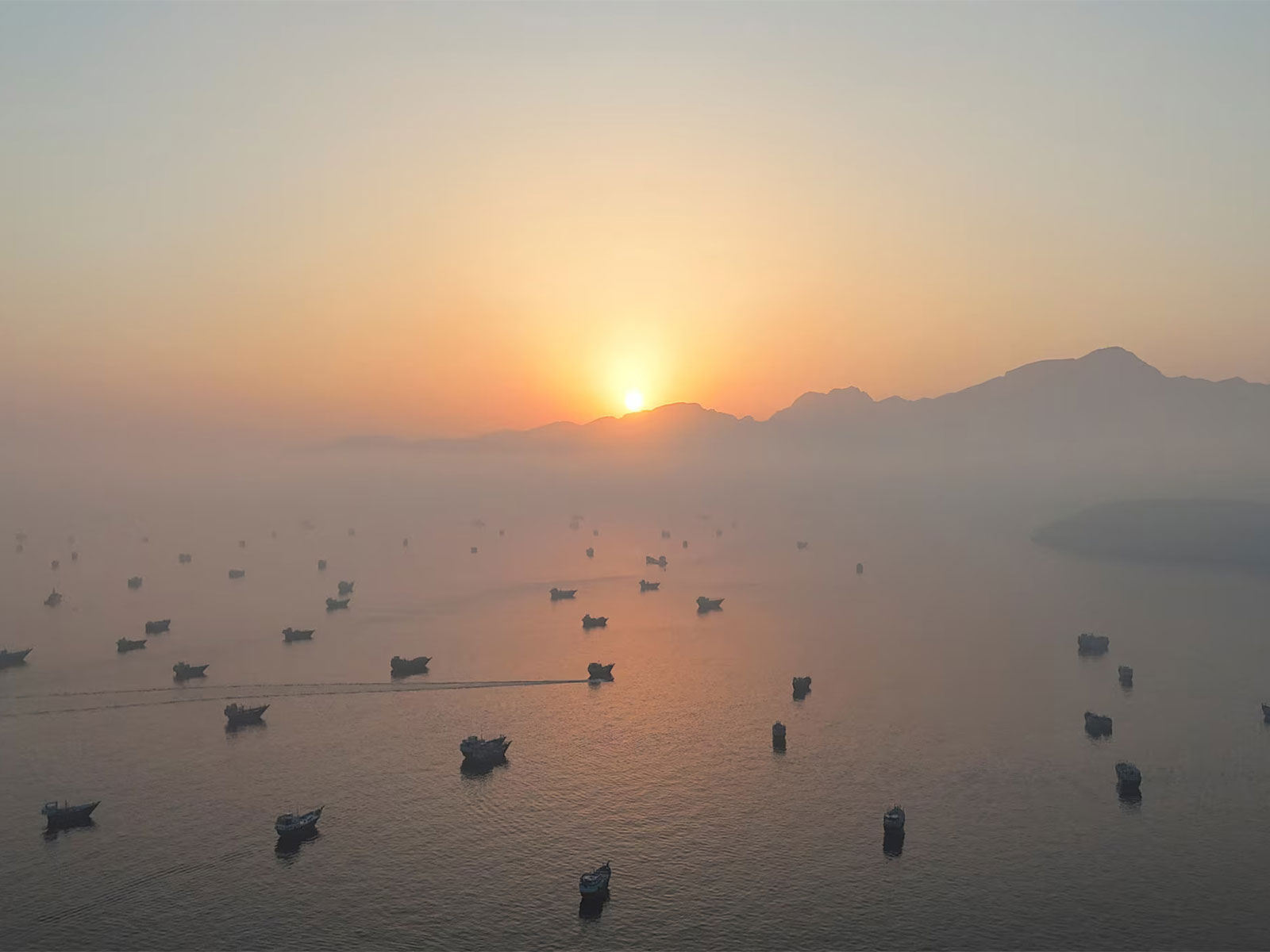
According to the officials, the operation has been active for several weeks, with 15 to 20 tankers navigating through a southern channel along the Omani coastline every night. Approximately 10 million barrels of oil per day, nearly half of the pre-conflict volume, are currently being moved out of the Gulf into international markets.
Beyond escorting loaded vessels, the US-led initiative also assists empty tankers in travelling from the Arabian Sea through the strait into Gulf ports to load oil before making the return journey.
The coordination is handled by a US task force operating out of Army headquarters at Fort Bragg, North Carolina, in collaboration with regional Gulf partners. Tankers are organised into structured inbound and outbound convoys that move through the designated southern corridor under American military direction.
US officials stated that the maritime corridor was made viable following a recent two-week campaign by US Central Command that degraded Iran's radar capabilities and maritime surveillance infrastructure. Additionally, the US Air Force is providing air defence coverage against potential Iranian drone and cruise missile strikes.
Following the strikes, Tehran's monitoring capacity along the southern route has been restricted to a small number of repaired radar stations and observers stationed on minor Islamic Revolutionary Guard Corps vessels, according to US officials. They noted that while Iranian forces have fired missiles towards perceived shipping lanes, American forces have successfully neutralised numerous incoming threats.
Over the last fortnight, nocturnal transits of 15 to 20 tankers have stabilised daily oil exports near the 10 million-barrel mark, with peak volumes occasionally reaching between 15 million and 20 million barrels per day.
Although energy flows remain below pre-war levels, the operation has mitigated a major economic disruption resulting from the conflict in one of the world's primary energy transit points.
"There is a tremendous amount of oil coming out of the Strait of Hormuz," Trump told Axios on Wednesday, while clarifying that Washington is not engaged in active negotiations with Tehran.
The complete operational specifics of the US-managed shipping passage had not been previously disclosed, Axios noted.
The Strait of Hormuz has served as a primary point of friction since hostilities escalated on February 28, leading to repeated supply disruptions and conflicting assertions regarding whether the passage is operational or blocked. Trump has previously declared the strategic waterway to be US territory.
The strait stands as a critical global energy chokepoint, accounting for roughly 20 per cent of global oil consumption, a quarter of globally traded oil, and approximately 11.4 billion cubic feet of liquefied natural gas (LNG) daily. (ANI)
US opens secret oil shipping corridor, exporting about 10 million barrels a day amid Iran stalemate: Report