NewsVoir
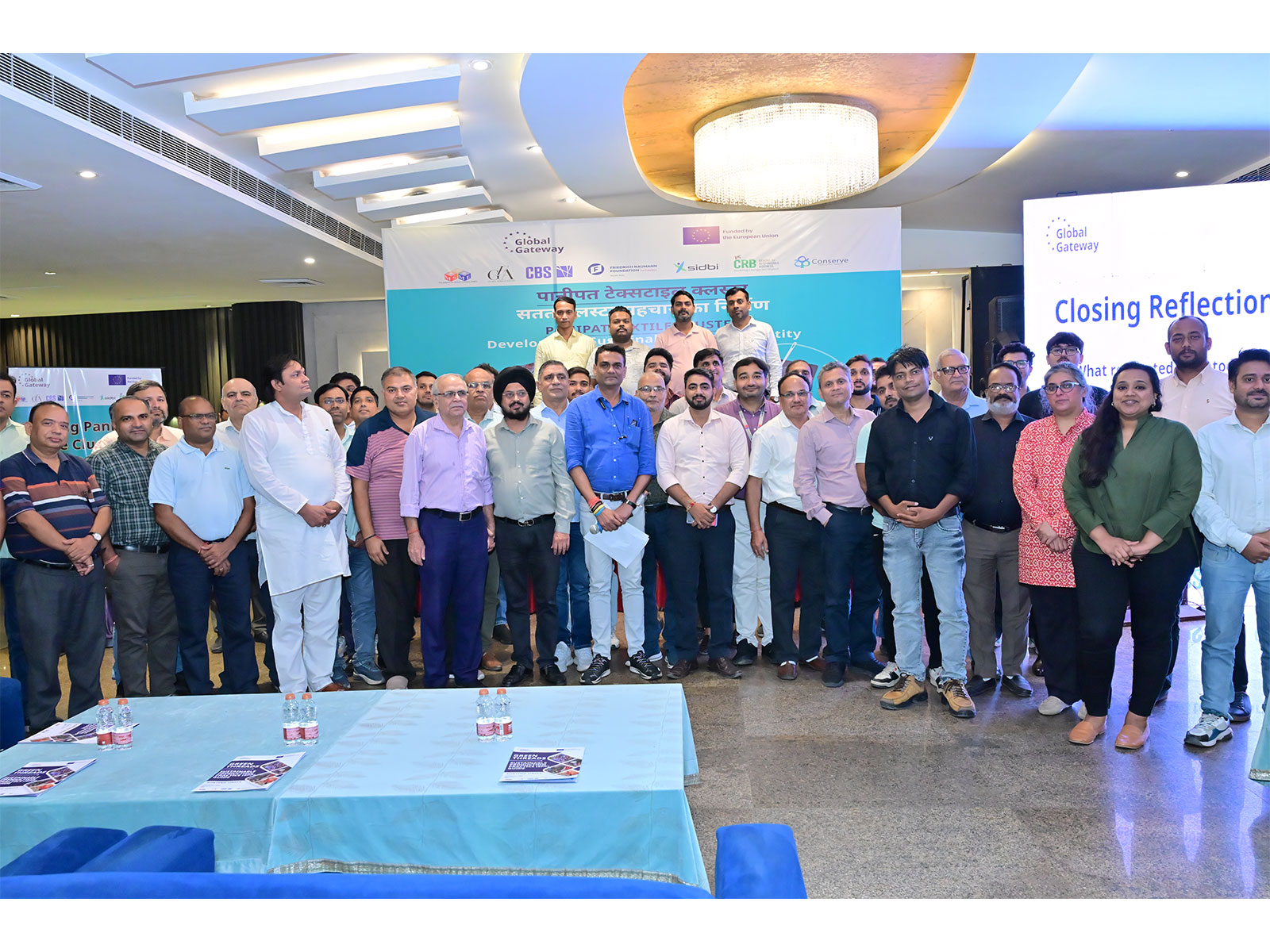
Panipat (Haryana) [India], September 23: A focused Sustainable Cluster Brand (SCB) and EU Sustainability Regulations Workshop was successfully organised in Panipat under the EU SWITCH-Asia – Green Threads Project, bringing together MSMEs, exporters and other stakeholders from the recycled textile cluster.
The workshop aimed to build understanding and facilitate common agreement and acceptance among MSMEs and exporters on the proposed SCB criteria for subsequent adoption, while also sensitising participants to evolving sustainability and regulatory requirements in global markets, particularly the European Union.
The session was organised by the Foundation for MSME Clusters (FMC) in collaboration with its consortium partners, Global Fashion Agenda (GFA) and Small Industries Development Bank of India (SIDBI), with participation from key stakeholders including the Center for Responsible Businesses (CRB) and Conserve India.
The workshop began with opening remarks by Mr. Abhishek Naga, Deputy General Manager, Energy & Environment, FMC, who stressed the importance of MSMEs proactively adapting to evolving global sustainability standards to enhance their competitiveness in international markets. He underscored the vast opportunity presented by the EU market, noting that the region imported approximately EUR 180.5 billion worth of apparel in 2024—of which EUR 79.2 billion came from developing countries. India’s share stood at around EUR 4.1 billion in apparel imports alone, and nearly EUR 7.0 billion when including textiles, apparel, and home textiles combined.
Harshitha Venati, Senior Impact Manager, Global Fashion Agenda, shared key insights on the EU Labelling Regulation. A central highlight of the session was an in-depth discussion on this regulation, complemented by a recap of earlier workshops covering the Ecodesign for Sustainable Products Regulation (ESPR), Extended Producer Responsibility (EPR), and Waste Shipment Regulation (WSR).
Devyani Hari, Senior Director, CRB, further explored the Digital Product Passport (DPP) and the proposed Sustainable Cluster Brand (SCB) criteria, emphasizing their critical role in driving transparency, traceability, and improved sustainability performance across the textile value chain.
The occasion was also graced by Mr. Rakesh Vig, Manager, Small Industries Development Bank of India (SIDBI), whose presence reaffirmed institutional support for the initiative.
Participants were sensitized to the growing importance of traceability, circularity, resource efficiency, and regulatory compliance—especially as EU sustainability requirements continue to evolve. The discussions directly connected these developments to the real-world challenges and opportunities facing Panipat’s recycled textile MSMEs and exporters, underscoring the need to strengthen sustainable practices and demonstrate end-to-end supply chain transparency.
Over 60 MSMEs, exporters, and stakeholders actively engaged in the session, contributing to dynamic conversations on SCB adoption, energy efficiency, circularity, and alignment with emerging global sustainability standards.
About the EU Switch Asia “Green Threads Project”
The Green Threads Project, supported by the EU SWITCH-Asia Programme, aims to accelerate the transition of India’s textile and apparel sector towards more sustainable, circular and resource-efficient production practices.
As global markets—particularly the European Union—introduce and strengthen sustainability-related requirements, MSMEs face increasing expectations to demonstrate compliance, transparency and environmental responsibility across their supply chains.
The project focuses on capacity building, policy dialogue, technical support and stakeholder engagement to help MSMEs:
- Understand emerging EU sustainability requirements, including ESPR, Digital Product Passports (DPPs) and WSR;
- Improve circularity, waste management and sustainable product practices;
- Strengthen their competitiveness in global markets; and
- Build long-term resilience through sustainable and resource-efficient business models.
The Foundation for MSME Clusters (FMC) is implementing the project in India, with a focus on supporting MSME clusters, particularly textile hubs such as Panipat and Amroha, in responding to the global transition towards greener and more sustainable manufacturing.
FMC’s engagement reflects its long-standing commitment to supporting MSMEs in adopting improved business and environmental practices, accessing emerging market opportunities and strengthening their long-term competitiveness.
About FMC
Foundation for MSME Clusters (FMC), a leading non-governmental, not-for-profit public charitable trust, established in India in 2005. FMC has made remarkable strides in fostering sustainable livelihoods and environmental progress through our innovative cluster development approach. Our work spans more than 300 MSME clusters, supporting over 100,000 artisanal and industrial units, ranging from household operations to medium-sized production entities. As an empanelled Nodal Agency with the Ministries of MSMEs and Rural Development, FMC extends support to prominent schemes like SFURTI, and is also providing technical, research, and evaluation support to various organizations such as SIDBI & KVIC. FMC has implemented multiple projects on environment and livelihoods with support from agencies like NABARD, UNIDO, UNDP, EU, ADB, and major corporates such as Cisco, Mahindra Finance, HCL, Yes Bank, and Hindalco.
(ADVERTORIAL DISCLAIMER: The above press release has been provided by NewsVoir. ANI will not be responsible in any way for the content of the same)
Panipat Workshop Builds Momentum for Sustainable Cluster Brand and EU Readiness