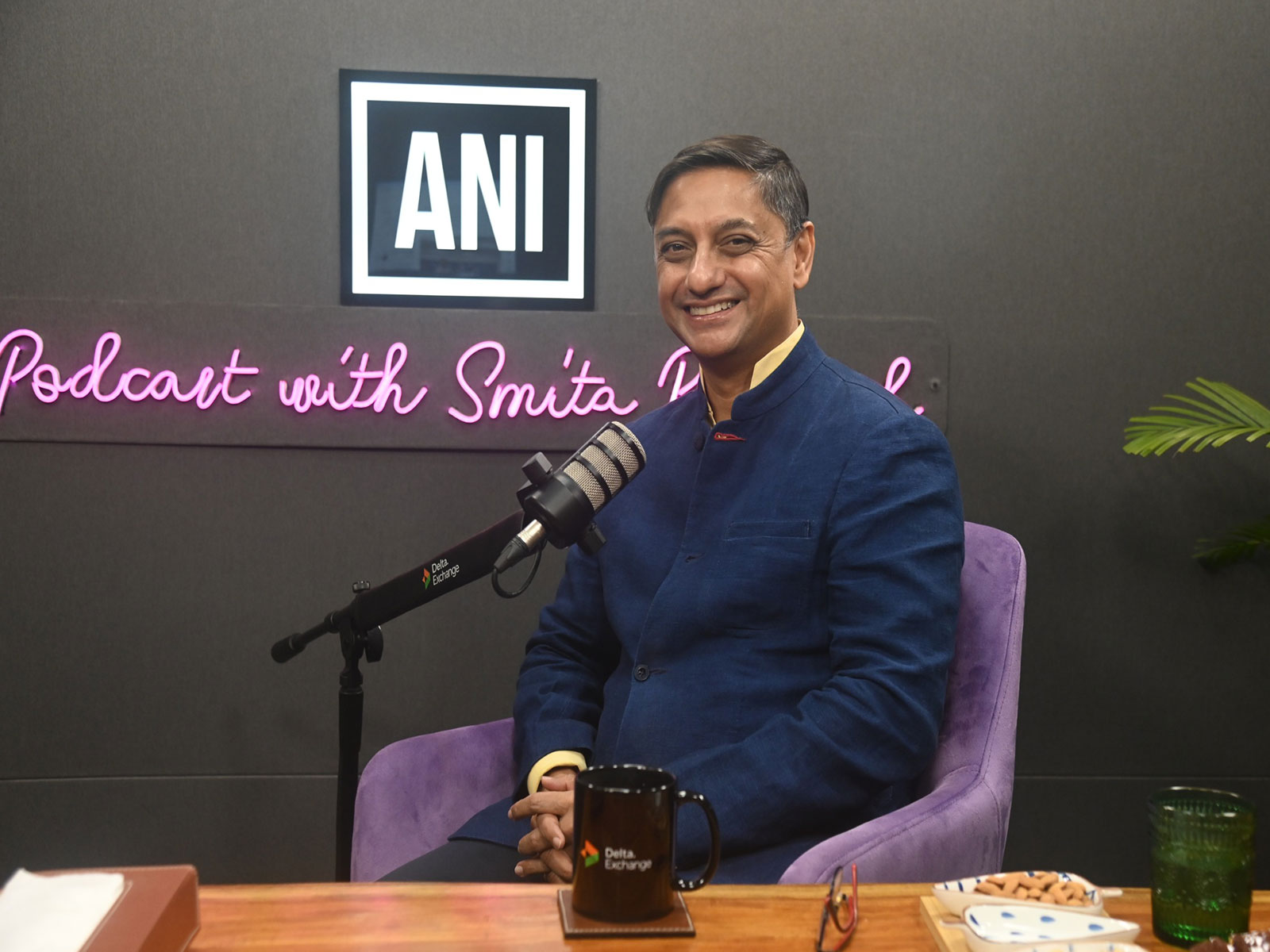
New Delhi [India], August 19 (ANI): India should not rush to finalise a trade agreement with the United States and must ensure that the pact protects the country's long-term interests, Member of the Economic Advisory Council to the Prime Minister (EAC-PM) Sanjeev Sanyal said in an exclusive interview with ANI.
Sanyal said substantial progress has been made in the India-US trade negotiations, but New Delhi should be prepared for further discussions if required as the agreement would remain in force for a long period.
"We will do it, you know, keeping our interests in mind. And if it requires a little massaging and further negotiation, we'll do that," Sanyal said.
He said the long-term nature of trade agreements makes it important for India to carefully examine the terms before signing.
"Because once we lock it in, it will be there for a fairly longish period. So for that reason, it is important that we don't hurry into it," he said.
Sanyal said trade agreements have become increasingly important as the global multilateral trading system has weakened. He noted that India has already made progress on trade pacts with Australia and the UK and is also progressing with the European Union and the US.
"Trade deals are important in a world where multilateral systems have broken down. You will need to have these bilateral systems," he said.
At the same time, Sanyal stressed that maintaining good relations with Washington should not mean compromising India's interests.
"I don't think we should rush into it. We do need to make sure that the I's are dotted and the T's are crossed," he said, adding that India also needs to maintain strong ties with other countries.
On the politically sensitive aspects of the negotiations, Sanyal said agriculture and dairy would require particular attention. He also underlined the importance of political consensus for a major agreement, drawing a parallel with the India-US civil nuclear deal.
"When it comes to dairy, when it comes to agriculture, you can have again a street movement, whether it's Punjab or anywhere else," Sanyal said.
"I think agriculture is a tricky issue and I can assure you that this government will make sure that the interests of our agricultural community will be looked after," he said.
Sanyal said the experience of the civil nuclear agreement showed that political consensus can be important when an agreement involves sensitive domestic issues.
He also spoke about the uncertainty surrounding US tariff policy, saying disruptions in trade relations with Washington have affected several countries and are not limited to India.
"Almost every other country in the world has faced some kind of a disruption in their trade relations with the US over tariffs or any other kind of thing. So in that sense, we are not unique," Sanyal said.
However, he said repeated tariff-related uncertainty can disrupt the normal flow of trade and affect broader bilateral relations.
"Repeatedly bringing this issue up causes a stop-go in the flow of goods and services and also in the relationship," Sanyal said.
He said the US leadership would eventually need to provide greater policy stability to its trading partners, including India.
"I do think that at some point in time, the political leadership in the U.S. will have to come to an understanding that they need a much more stable set of policies," he said.
Sanyal's remarks come amid continuing India-US discussions on a bilateral trade agreement, with tariffs, agriculture, dairy and market access among the key issues involved.
While underlining the importance of strong ties with the US, Sanyal noted that India should balance those relations with the need to protect its domestic and long-term economic interests. (ANI)
"India should not rush into US trade deal, must protect national interests": EAC-PM Member Sanjeev Sanyal