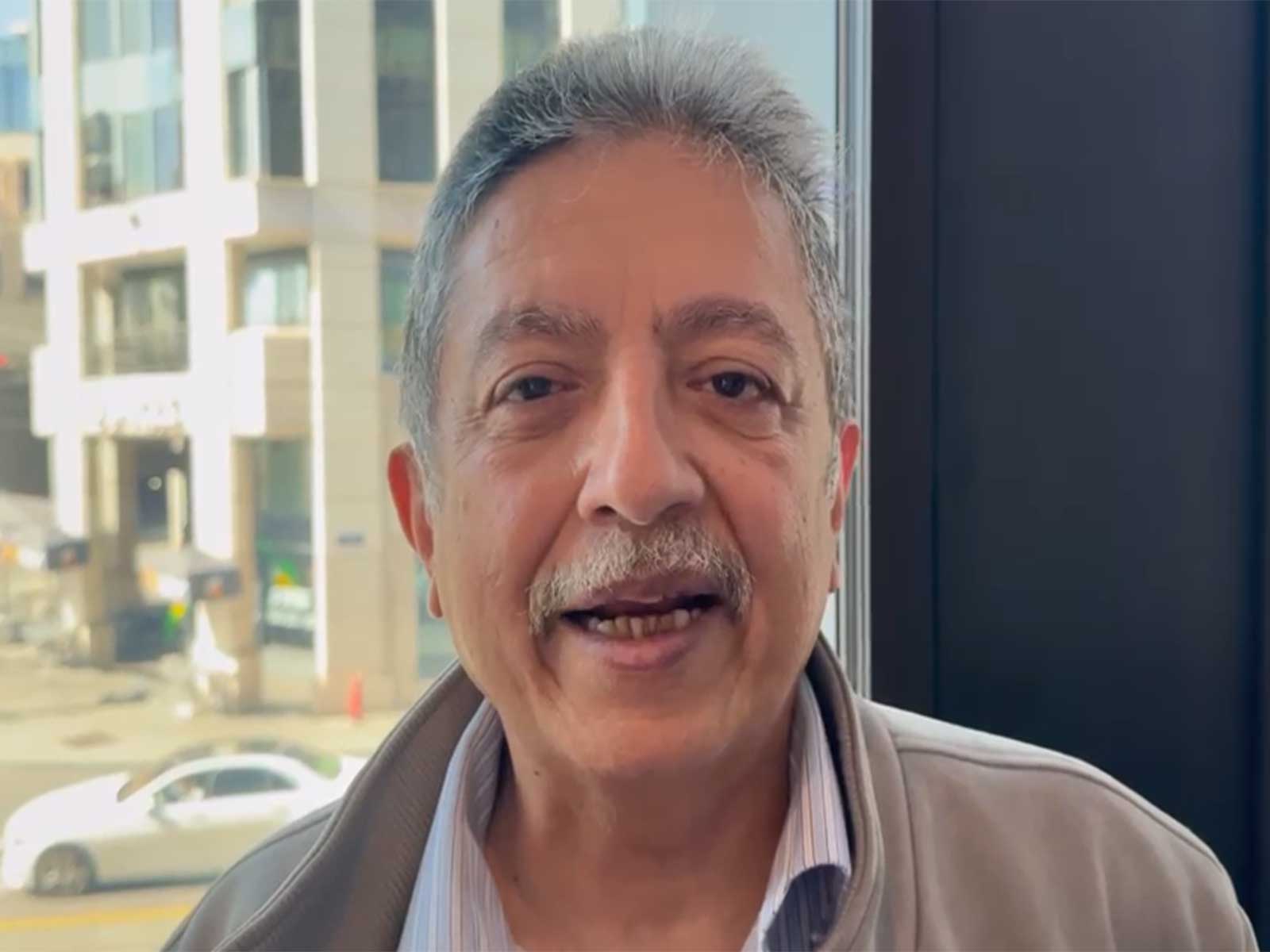
Geneva [Switzerland], September 22 (ANI): Human rights activist Arif Aajakia has alleged that Pakistan has failed to address terrorism-related concerns and has committed or enabled human rights violations in Balochistan, Pakistan-occupied Jammu and Kashmir and Khyber Pakhtunkhwa.
In an interview, Aajakia argued that the presence of internationally wanted terrorists in Pakistan was evidence, in his view, of the country’s links to terrorism.
“Evidence of terrorism is never concrete for any country. Even the United States had no concrete evidence against Osama Bin Laden, but the world knew that they were doing terrorism,” Aajakia said.
Referring to Jaish-e-Mohammed chief Masood Azhar, Aajakia alleged that he was released from an Indian prison following the hijacking of an Indian aircraft by Pakistan-sponsored terrorists.
“Masood Azhar of Jaish-e-Mohammed was in Indian jails. Pakistan-sponsored terrorists hijacked an Indian plane and liberated Masood Azhar from Indian jails,” he claimed.
Questioning why Azhar remains in Pakistan, Aajakia alleged that terrorist infrastructure continued to operate in the country.
“Why is he in Pakistan? What is happening in Bahawalpur? There are so many terrorist camps, there are so many terrorist organisations,” he said.
Aajakia further claimed that several internationally wanted terrorists had been found in Pakistan.
“The biggest evidence is that the most wanted terrorists of the world are living in Pakistan and, until now, have been caught or killed in Pakistan by international forces, like Osama Bin Laden, like Abu Zubaydah, like Abu Faraj Al-Libyi, and so many other terrorists were found in Pakistan,” he said.
On Balochistan, Aajakia alleged that the region’s natural resources were being exploited by Pakistan while local people continued to face shortages of basic amenities.
“Balochistan is an occupied land, and Balochistan is occupied because of its rich minerals,” he alleged, further accusing the Pakistan Army of committing “atrocities” and “genocide” in the region.
According to Aajakia, the Baloch population’s demands initially centred on basic necessities and rights but had increasingly shifted toward a demand for independence.
Aajakia cited Sui’s natural gas reserves as an example of what he described as unequal distribution of resources.
“The simple example I would like to give is that there is a place in Balochistan, Sui, and their gas was exploited; natural gas was exploited in 1956. Even today, after 70 years, the entire Punjab is getting gas from Sui, but the very Sui they don't have gas. Women still use wood to cook their food,” he said.
He also alleged that gold, copper, oil and gas from Balochistan were being exploited by Pakistan without adequate benefits reaching the region.
“Ratodero, Ratodek, gold mine, copper mine, gold, copper, petrol, gas, every mineral is exploited by Pakistan, and it is given to Punjab province, but Balochistan gets nothing,” Aajakia alleged.
He claimed that people demanding their rights in Pakistan were being subjected to extrajudicial killings.
On Pakistan-occupied Jammu and Kashmir, Aajakia said access to social media and the internet had, in his view, changed perceptions among residents of PoJK and Gilgit-Baltistan.
Aajakia alleged that Pakistani state propaganda had portrayed Jammu and Kashmir in India as a region suffering from widespread rights violations. He claimed that social media had enabled people in PoJK and Gilgit-Baltistan to compare conditions on the two sides.
“When social media came in, the Kashmiris of POJK and Gilgit-Baltistan found that India's Jammu and Kashmir is flourishing and developing,” he said.
Aajakia pointed to what he described as the expansion of educational and medical institutions, tourism and infrastructure in Jammu and Kashmir.
In contrast, he alleged that residents of PoJK faced shortages of food, safe drinking water and educational facilities.
“People of POJK are in lines of miles long for flour. They don't have safe drinking water; they don't have educational institutes,” he claimed.
According to Aajakia, these conditions had contributed to growing demands among some residents for political rights and independence from Pakistan.
“So now Kashmiris have realised that we are not exploited by India, but we are exploited by Pakistan,” he said.
Aajakia also alleged that Pashtuns in Khyber Pakhtunkhwa and Afghanistan had suffered disproportionately from decades of militancy and conflict.
“The people of KP and Afghanistan, the Pashtuns, they are the biggest victims of Pakistan terrorism,” he said, alleging that Pakistan had used Pashtuns in connection with its policies toward Afghanistan since 1979.
On the Taliban, Aajakia alleged that Pakistan had played a central role in creating and training the group.
“Talking about the Taliban, who created the Taliban? Pakistan created the Taliban,” he said, further alleging that Pakistan had provided the Taliban with an extremist ideological framework.
Aajakia also claimed that Pashtuns in Khyber Pakhtunkhwa faced violations of their civil, political, economic, social and cultural rights.
Aajakia argued that international powers should take greater action over what he described as serious human rights violations in Pakistan.
“Pakistan is being supported by superpowers like China and the USA for their own interests. Otherwise, Pakistan should be accountable for all the gross human rights violations,” he said.
Calling for greater international scrutiny, Aajakia said the United States, European Union and other major powers should take steps to hold Pakistan accountable.
“The international community, especially the bigger powers like the USA, European Union and others, should bring Pakistan to the court and Pakistan should be held accountable for gross human rights violations in the region and especially in Pakistan,” he said.
Aajakia concluded by claiming that people affected by conflict and alleged rights violations in Pakistan were looking to international institutions for support and assistance. (ANI)
Human rights activist Arif Aajakia alleges continued terror presence in Pakistan