PRNewswire
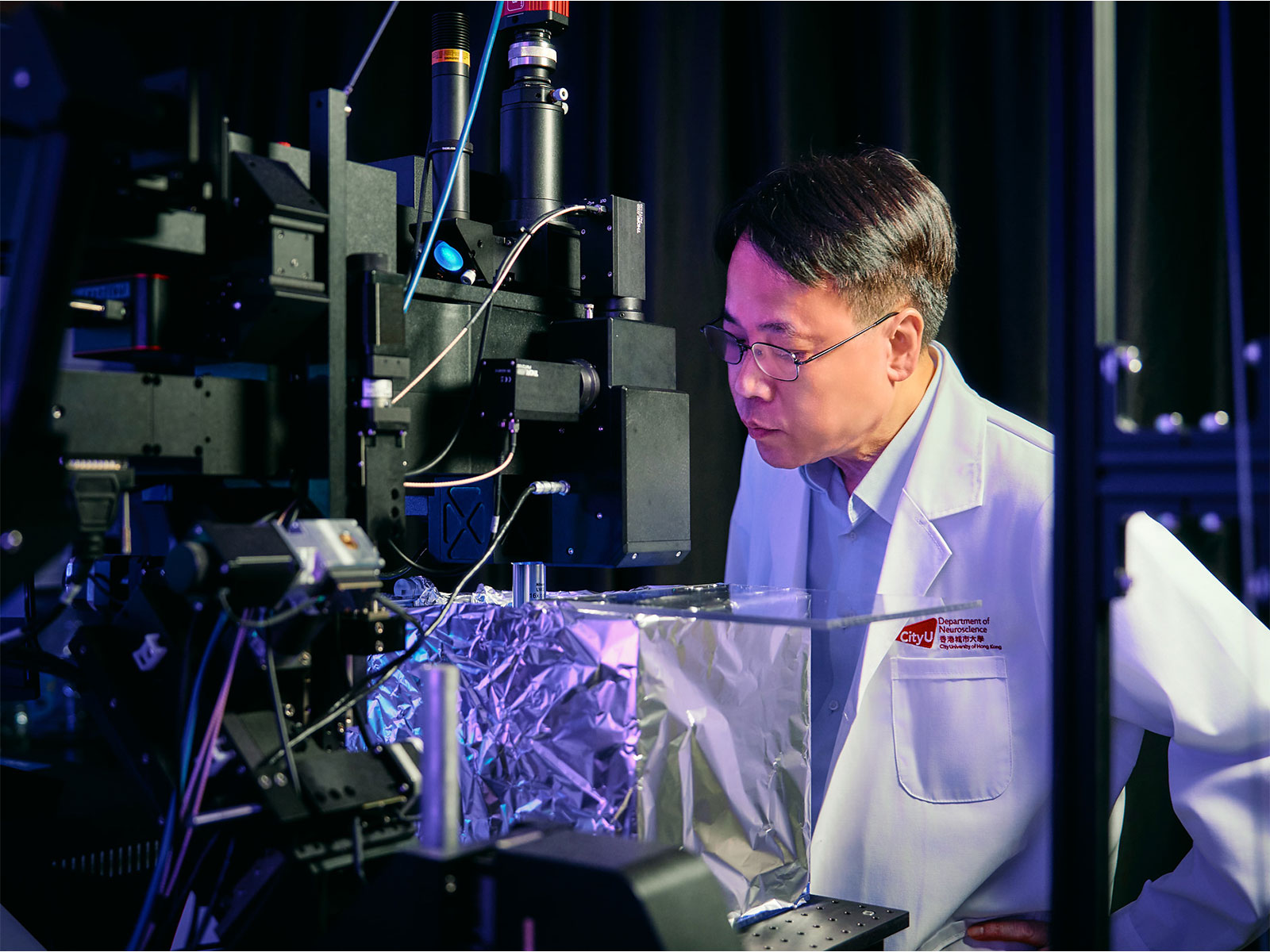
Hong Kong, September 3: It is commonly perceived that multitasking is highly inefficient, with the brain often "crashing" or scrambling when trying to do two things at once. A study co-led by Professor Yung Wing-ho, Chair Professor in the Department of Neuroscience at City University of Hong Kong (CityUHK), together with scholars from The Chinese University of Hong Kong, has explained the underlying cause, revealing how the brain dynamically reorganises itself to break through the cognitive bottleneck and achieve efficient, simultaneous multitasking.
The study confirms at the cellular level the brain's remarkable ability to adapt and optimise its neural resources, overturning the public's understanding of its parallel processing capacity and providing insights into the neural mechanisms that allow humans to balance flexibility and specialisation in daily life. The findings were published in the leading neuroscience journal Neuron, under the title "Dynamic coordination and segregation mechanisms in higher cortex for parallel task processing".
To investigate how the brain handles two tasks at the same time, the research team utilised an innovative mouse model to observe the brain's secondary motor cortex (M2) during dual-task performance. Mice had to maintain a continuous lever movement task while listening to different auditory cues and deciding whether to respond, a sensory decision-making task known as a "Go/No-Go" test. Using longitudinal two-photon calcium imaging, the researchers tracked the activity of the same individual neurons within a large neuronal population in M2 over several weeks of training, allowing them to observe how neural activity was reorganised as the animals learned to multitask.
The study showed that multitasking interference can be traced at the level of individual neurons. Neurons involved in both tasks became hotspots of competition, providing a cellular basis for the brain's limited capacity to process competing demands. The competition, however, was not confined to neurons shared by both tasks. Even neurons mainly responsible for one task adjusted their activity when the other task was being processed, helping the brain coordinate the two competing demands and achieve early multitasking success.
With continued training, the brain adopted a different strategy. More task-specific neurons were recruited, while the neural representations of the two tasks became progressively separated, allowing the tasks to progress more independently with less interference and boosting overall multitasking performance.
The team further showed that M2 plays a causal role in this learning process. When M2 activity was moderately suppressed during training, the animals failed to improve with practice. Once the suppression was removed, their multitasking performance rapidly improved.
In addition to biological observations, the research team ran simulations using recurrent neural networks. They found that simply separating the representations of the two tasks was not the most effective solution; learning was faster when early coordination was preserved while other task representations became progressively separate. This finding coincides with the strategy observed in the biological brain and offers significant implications for the development of artificial intelligence.
Professor Yung said, "Our findings suggest that efficient multitasking requires a delicate balance between coordination and specialisation. These principles may provide a framework for understanding multitasking deficits in neurological disorders and, importantly, offer a biologically inspired strategy for designing artificial intelligence systems that can learn and manage multiple competing tasks more efficiently."
Understanding these dynamic brain processes opens new avenues for enhancing cognitive function and human potential. Moving forward, the team will leverage these insights to optimise learning strategies in education, develop more effective rehabilitation programmes for neurological conditions and continue to explore potential applications in other fields.
(ADVERTORIAL DISCLAIMER: The above press release has been provided by PRNewswire. ANI will not be responsible in any way for the content of the same)
CityUHK neuroscientist crack code on brain multitasking, uncovering neural mechanisms behind cognitive bottlenecks