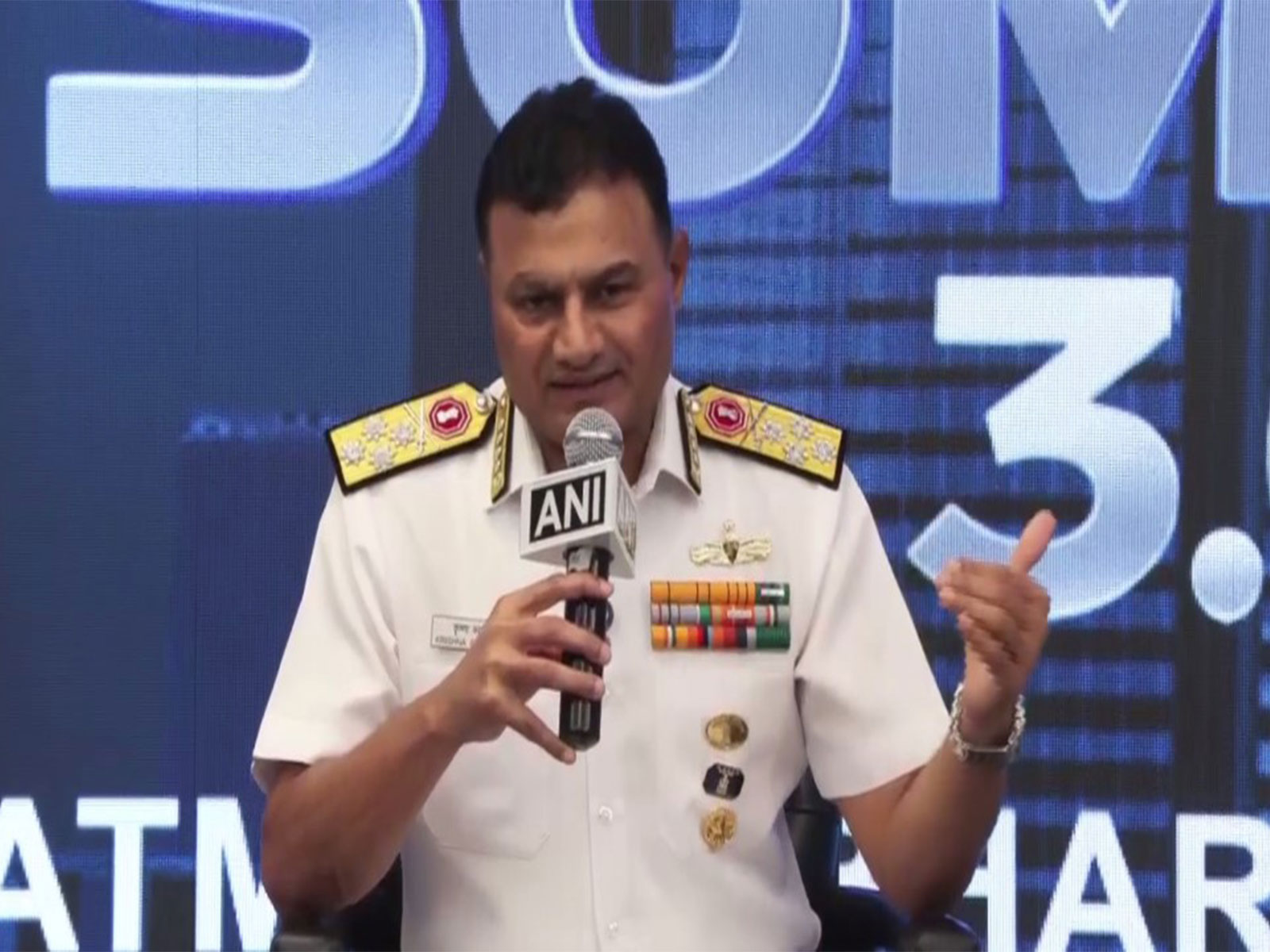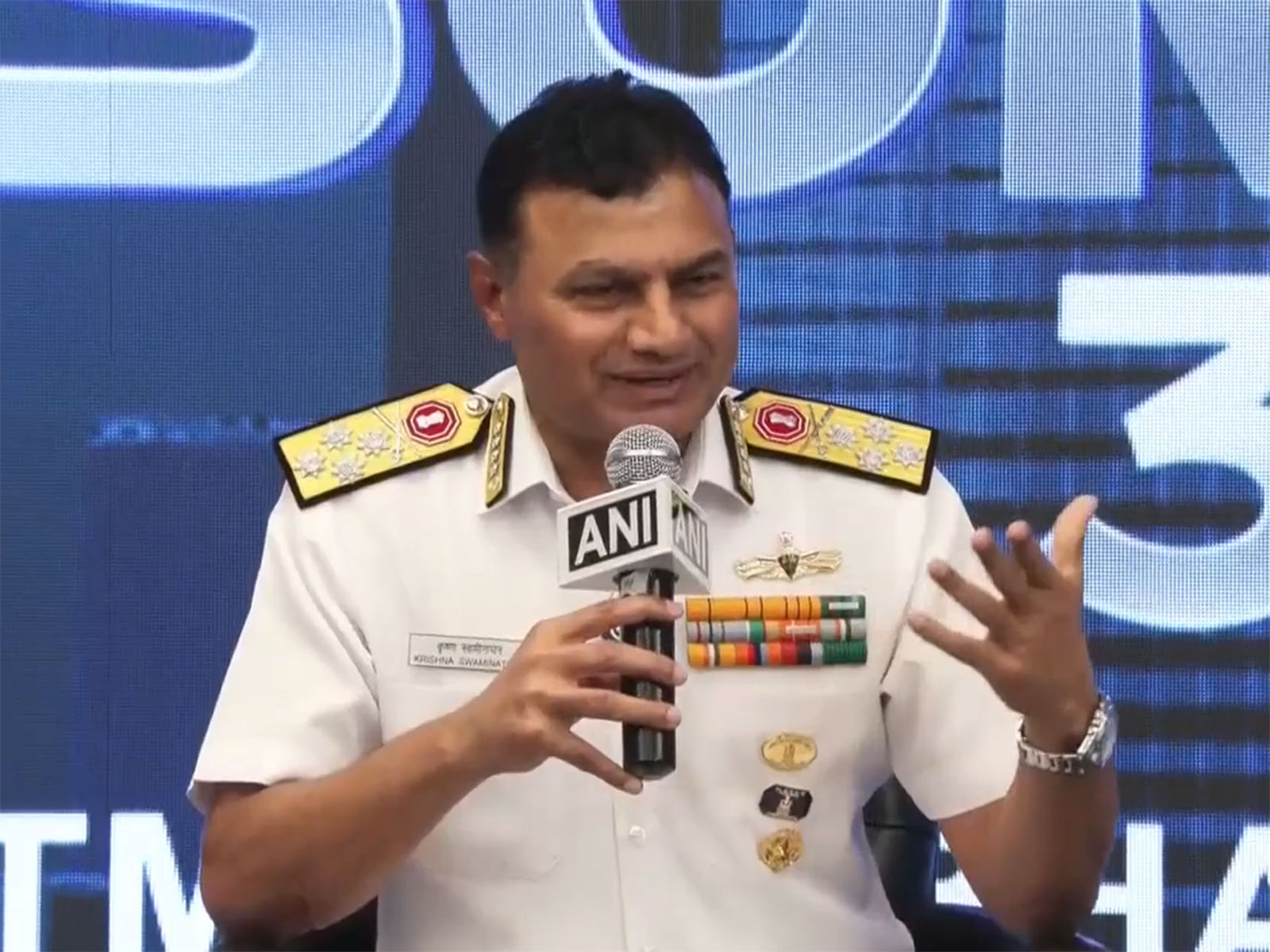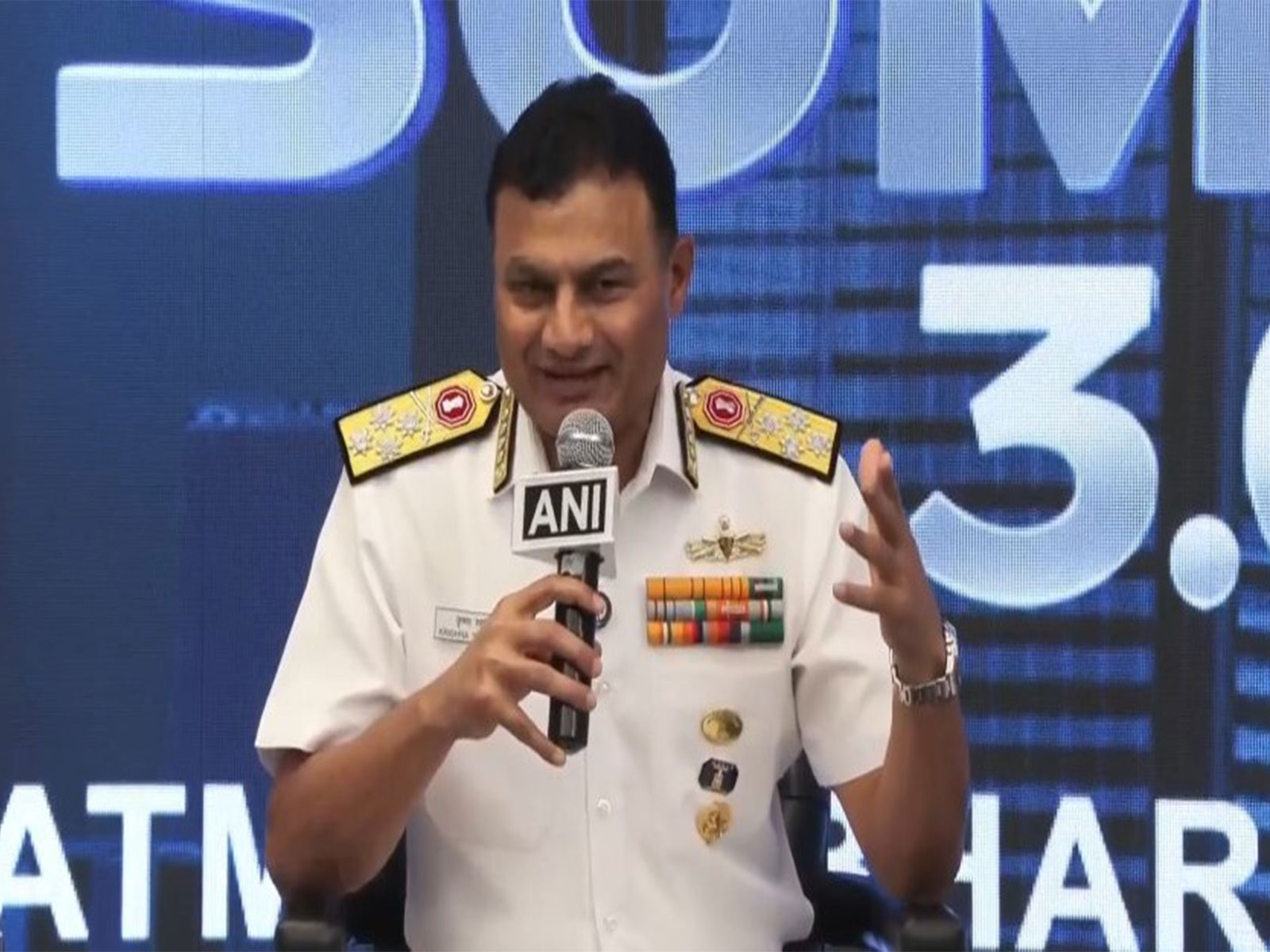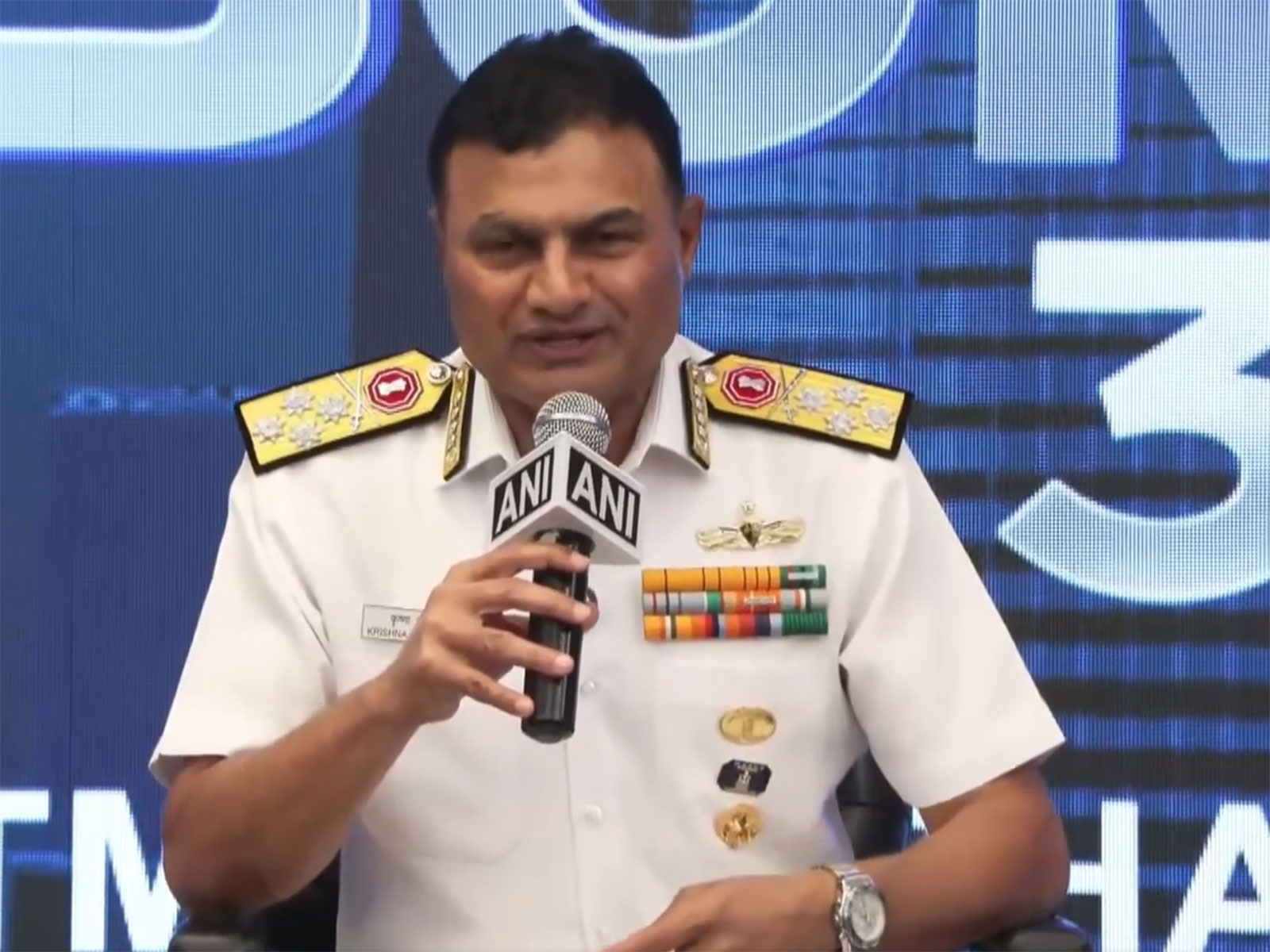
New Delhi [India], November 16 (ANI): Dismissing the concept of one-front or two-front wars because the sea is contiguous, Chief of the Naval Staff Admiral Krishna Swaminathan on Monday asserted that the Indian Navy possesses robust plans and powerful surface, aerial, and underwater assets to tackle adversarial submarine threats.
Speaking at the ANI National Security Summit 3.0 in New Delhi, the Navy Chief addressed strategic challenges stemming from naval expansions in neighbouring countries, emphasising that India evaluates China and Pakistan through distinct diplomatic and military lenses.
Highlighting the supply chains powering neighbouring militaries, Admiral Swaminathan said, "...The fact that more than 85% of the hardware Pakistan currently has in its armed forces is of Chinese origin, with some of Turkish origin but largely Chinese, is something we take note of. We are fully aware of the capabilities they possess. In the Navy, we don't talk about one-front or two-front wars because the sea is contiguous...We have very powerful surface ships."
Detailing India's deterrence capabilities and preparedness against adversarial underwater assets, Swaminathan stated, "We have very powerful aerial assets, and we also have very powerful submarines. We have a robust plan to deal with the threats posed by those submarines, if indeed they pose a threat. We know how to tackle them"
The Navy Chief addressed strategic challenges posed by developments in neighbouring naval forces, making it clear that India evaluates Pakistan and China through separate frameworks.
"Firstly, uh, I think it's important for me to make a distinction between how we see Pakistan and how we see China, and we don't want to even for a moment club both of them in the same group. You know, we have a relationship with Pakistan, and we have a relationship with China, uh, at the national level. So, you know, we don't have a view of our own in the Indian military. We just follow the national view," he said.
He further elaborated on how the defence establishment handles external military hardware, noting, "And at the national level, we have, you know, this is not, uh, uh, a relationship that we combine one country with the other. We have our independent interactions with them, and, you know, we watch what they have."
Responding to the security implications of Pakistan acquiring advanced Hangor-class submarines and Beijing's broader naval buildup, Admiral Swaminathan acknowledged the qualitative upgrade in adversary capabilities:
He added, "There is absolutely no question about the fact that, uh, you know, the eight submarines that the Pakistani Navy might get are a very, very formidable capability. And like you rightly said, it is a capability that the Pakistani Navy has not had before. Therefore, we need to watch it, you know, if any adversarial nation, uh, gets a a capability such as submarines and in those large numbers, it is important for us to watch what those what capabilities, the those submarines bring, what might it translate to into in in terms of operational, you know, capabilities and those kinds of things."
Highlighting the growth and readiness of India's own underwater fleet to counter such developments, the Navy Chief added, "In terms of our own submarine force, you know, we've got a formidable submarine force, and, uh, you know, hopefully we're getting a lot more of them. We are cognizant of the importance of submarines and submarine warfare, uh, especially in the Indian Ocean region, you know, in the geography in which we operate."
Admiral Swaminathan asserted that the force remains fully equipped to handle emerging challenges and said, "we are quite familiar with the geography. We know exactly, you know, how submarines, uh, are dealt with in, uh, in the Indian Ocean region. Uh, we've been doing this all our lives, so we are ready for that threat, and we are proliferating our own submarine force, and, you know, we will, uh, we will be able to, uh, protect our national interest in whatever form they come, uh, with our submarine force, with our surface force, and of course, with naval aviation as well."
Turning to China's expanding footprint in southern maritime channels, Admiral Swaminathan addressed China's long-term deployment in the Indian Ocean Region.
Commenting on China's persistent maritime presence and India's approach to freedom of navigation, Admiral Swaminathan stated, "China has been present in the Indian Ocean Region on an almost permanent basis since September or October 2008. China's presence in the Indian Ocean Region is not new to us. China can make its own sovereign decisions. We believe in freedom of navigation, and the sea belongs to the global commons. Anybody who comes here for legitimate business is welcome." (ANI)
Chief of Naval Staff dismisses "one-front or two-front war" concept, says "sea is contiguous"; highlights robust plans to tackle submarine threats