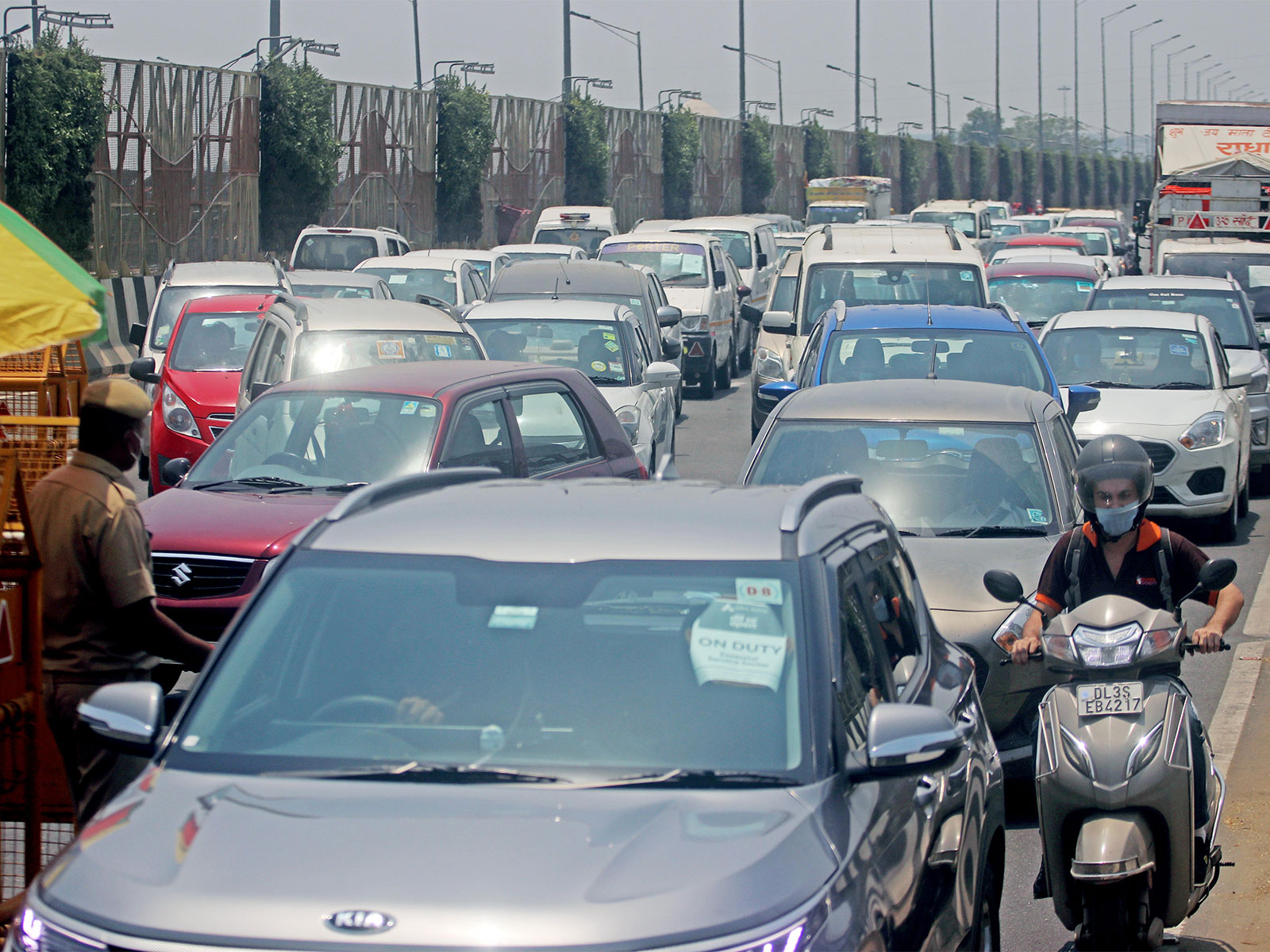
New Delhi [India], September 30 (ANI): Leading passenger vehicle makers Maruti Suzuki, Tata Motors and Hyundai Motor India welcomed the government's new Corporate Average Fuel Economy (CAFE) III norms, saying the framework gives the industry greater clarity to plan investments while allowing multiple technologies to meet tighter fuel-efficiency targets.
The reactions come as automakers prepare their product strategies for the next regulatory cycle beginning April 1, 2027. The norms, applicable until March 31, 2032, target a 16.7 per cent improvement in passenger vehicle fuel efficiency over five years.
CAFE III is expected to influence how automakers balance investments across electric vehicles, hybrids, alternative fuels and more efficient conventional vehicles, as fleet-level fuel consumption targets become progressively stricter.
Maruti Suzuki said the regulation recognises the role of different powertrain technologies and fuels, allowing manufacturers to pursue multiple routes towards lower emissions.
“The regulation recognizes the contribution of multiple powertrain technologies and fuels encouraging multi-faceted R&D and innovation,” said Rahul Bharti, Senior Executive Officer, Corporate Affairs, Maruti Suzuki.
He added that the credit and debit mechanism under CAFE III was an improvement over the previous CAFE-II framework.
Tata Motors Passenger Vehicles said the continued recognition of zero-emission technologies reinforces the role of electrification in India’s cleaner mobility transition.
“The clarity and predictability provided by the framework will enable the industry to plan investments, accelerate innovation and offer customers an increasingly compelling range of cleaner mobility solutions,” said Shailesh Chandra, MD & CEO, Tata Motors Passenger Vehicles Ltd.
Hyundai Motor India also highlighted the regulatory certainty provided by the new framework.
“The norms provide a clear and predictable regulatory roadmap through a 3+2 year compliance block structure, enabling manufacturers to undertake long-term product and technology planning with greater certainty,” said Tarun Garg, MD & CEO, Hyundai Motor India Limited.
Garg said the framework’s technology-neutral approach recognises multiple pathways, including electrification, alternative fuels and advanced fuel-saving technologies.
Under CAFE III, the fuel-consumption benchmark will tighten from 3.996 litres per 100 km in 2027-28 to 3.3273 litres per 100 km by 2031-32.
The framework also provides incentives for battery electric vehicles, plug-in hybrids, strong hybrids, range-extended electric vehicles and flex-fuel vehicles in fleet-average calculations.
Manufacturers exceeding their targets will be able to carry forward credits, while those facing a shortfall can use or trade eligible credits, giving companies greater flexibility in meeting the new efficiency requirements.
The regulations are therefore set to shape both the technology mix and investment decisions of passenger vehicle makers over the next five years as the industry moves towards stricter fuel-efficiency and emission standards. (ANI)
Auto majors welcome CAFE III, say technology flexibility to aid cleaner vehicle transition